Claw Machine vs. VR Game Machine: A Buyer's Decision Checklist
A claw machine is usually the safer first asset for an arcade buyer who needs repeatable walk-in income with thin staffing. A VR game machine only justifies its extra operational load in venues that can supervise timed sessions, manage content, and charge premium prices. The two categories should be separated with an operating and contract checklist, not with a feature sheet.
Both machines compete for the same capital, the same floor plate, and the same operator attention. What separates them is how the income arrives: a claw machine collects many small payments per hour from passers-by, while a VR game machine depends on fewer, longer, scheduled sessions. Buyers who compare only screen size, lighting, and cabinet looks usually end up with the wrong asset for their audience.
This guide sets out five decision lenses, a six-step comparison process, and the purchasing terms and acceptance criteria that should be fixed before either machine is ordered.
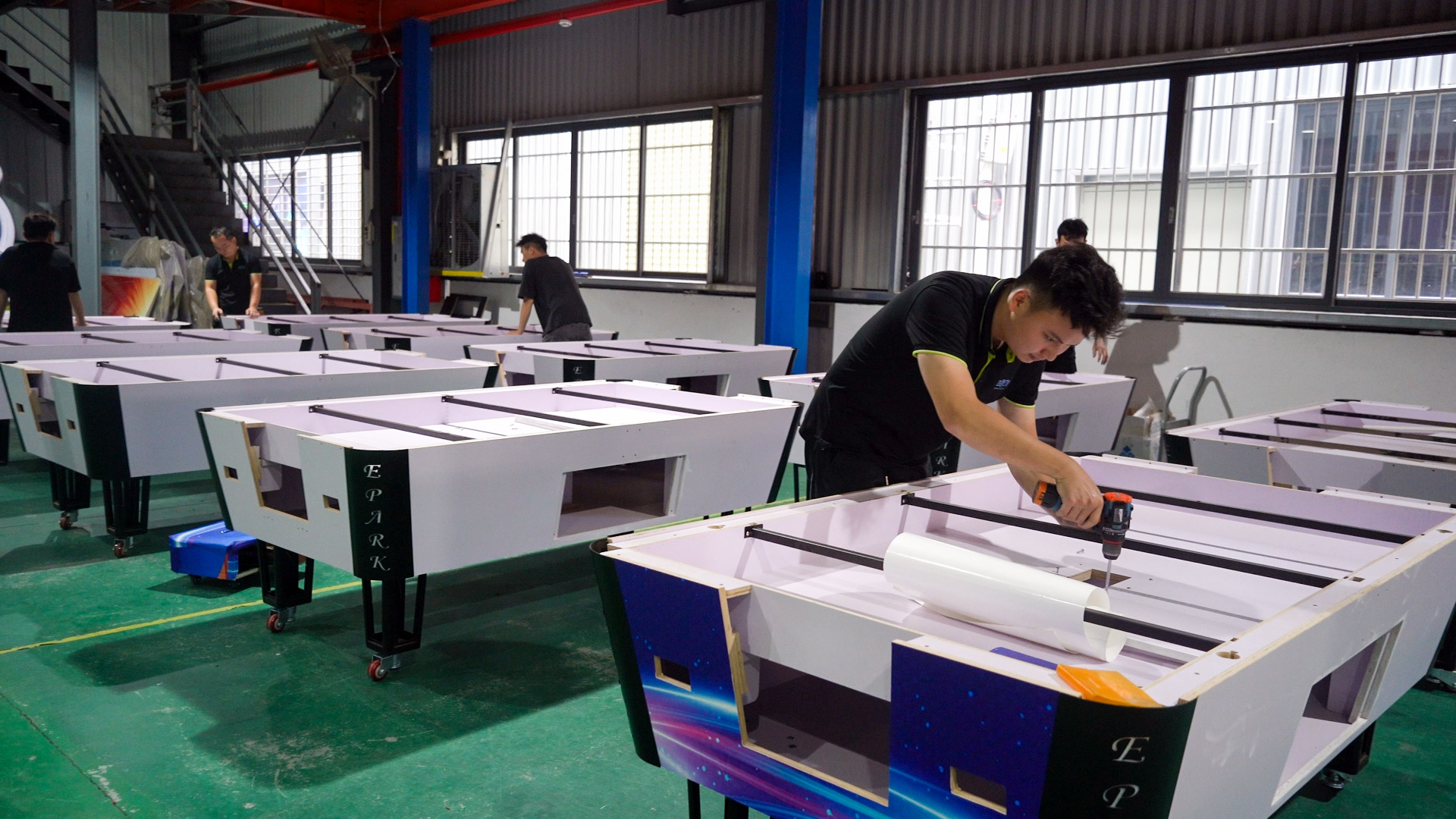
Claw machines and VR game machines convert the same floor space into income through very different operating models.
1. Why the Claw vs. VR Decision Goes Wrong
A claw machine is a coin-, token-, or card-operated cabinet in which a player controls a claw to lift plush toys, capsules, candy, or other prizes, and the prize itself is the product. A VR game machine is a seated or standing platform that runs virtual-reality content for a timed session, and the experience is the product. Both sit inside the smart life and consumer innovation category, and both appear on the same amusement-equipment price lists, which is exactly why they get compared badly.
Three failures repeat in real procurement decisions.
Comparing at the product level instead of the programme level. A VR game machine is a platform with content, hygiene procedures, and a supervision requirement attached to it. A claw machine is a self-service cabinet with a prize supply chain behind it. Comparing the two without their operating programmes is like comparing a coffee machine with a barista: the hardware price is the smallest part of the decision.
Selecting on novelty. VR content tends to look more advanced in a showroom, and that visual advantage is easy to mistake for commercial advantage. Novelty decays, however, and the asset remains. A claw machine's appeal is older but also more stable, because the loop is short, the mechanic is instantly understood, and no operator has to explain it to a first-time player.
No acceptance criteria. Many buyers negotiate a price and never define what the machine must prove on arrival. Without written criteria, factory-side QC is trusted rather than verified, and a lift that is too weak, a payment module that rejects tokens, or a missing spare-parts kit only surfaces after installation, when the leverage over the supplier is gone.
Definition to hold on to: a claw machine sells a repeated micro-experience to anyone walking past; a VR game machine sells a finite session to a player who has decided to spend more time in one place.
2. Industry Background: Two Categories, Two Maturity Levels
The claw machine category is large, distributed, and price-competitive. Dataintelo, a commercial research publisher, valued the global claw machine market at USD 2.8 billion in 2025, with Asia Pacific holding a 42.7% revenue share in the same year. That concentration matters to buyers because it means manufacturing capacity, component supply, and spare-parts availability are densest in Asia Pacific, and in the Guangdong cluster in particular.
The category also has a clear customs identity. Under the WCO Harmonized System, subheading 9504.30 covers 'other games, operated by coins, banknotes, bank cards, tokens or by any other means of payment, other than automatic bowling alley equipment' — the line under which coin-operated claw, crane, gift, capsule, and candy machines are classified. Buyers planning imports should request that classification from the supplier, because it drives duty calculations and because it separates the machine from unrelated toy or video-console lines.
Compliance is a first-order sourcing issue rather than an afterthought. Commercial claw machines in the United States must typically meet UL 22, the standard for amusement and gaming machines. In other markets, the applicable electrical-safety, EMC, and amusement-device requirements must be confirmed against the standard's own scope clause and against the destination regulator, not assumed from a supplier's marketing page.
VR game machines sit on a different maturity curve. Their value depends on the content library, the session design, the reset time between players, and the operator's ability to manage cleanliness of shared headsets and controllers. The hardware is durable, but the proposition is refreshed by software and content, which makes the category more service-intensive and more dependent on supplier support over the asset's life. Buyers should treat VR content licensing, update cadence, and spare-headset availability as core purchase questions rather than optional extras.
The claw machine, by contrast, has been quietly modernised within the smart life and consumer innovation context. LED-lit cabinets, cashless payment modules, mixed prize formats, and multi-player configurations have extended the format without changing its basic mechanic. EPARK, a Guangzhou-based entertainment equipment manufacturer, lists coin-operated single-player, double-player, and four-player claw machine configurations in its catalogue, which shows how far the format has been segmented for different floor plans and throughput targets.
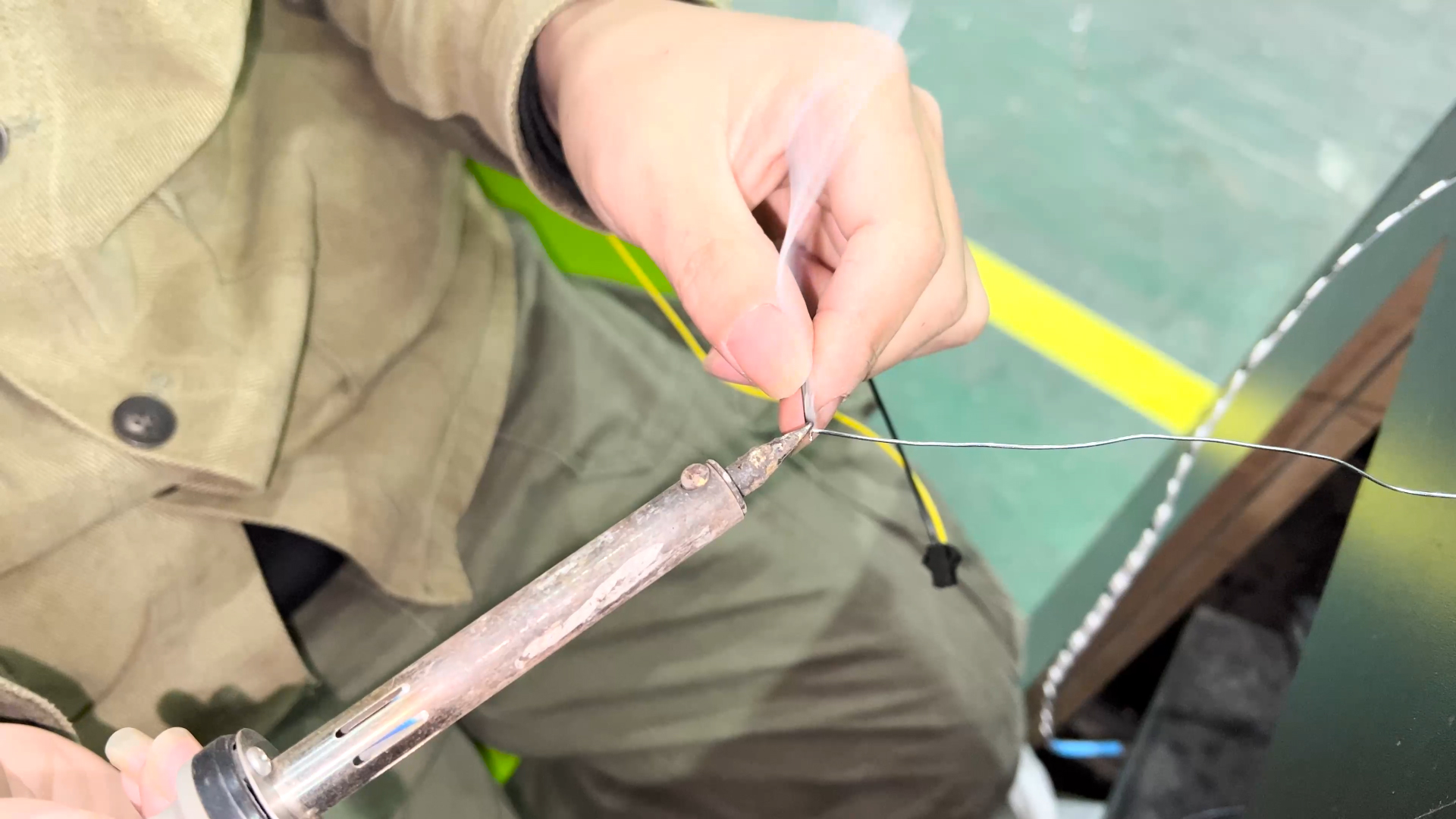
Claw machine formats now range from compact single-player units to multi-player cabinets for high-traffic floors.
3. The Five Decision Lenses
Lens 1 — Target audience fit
A claw machine serves an unfiltered audience: children, families, teenagers, and adults waiting for someone else. That is its commercial strength. A plush toy claw machine, a capsule claw machine, or a candy claw machine can each be tuned to a different age band simply by changing the prize mix, without changing the cabinet. A VR game machine serves a narrower and older audience, and it needs a player who is willing to commit time, accept a headset, and follow an instruction.
If your floor traffic is largely walk-in families with short dwell times, the claw machine aligns with how those visitors already behave. If your venue already holds groups that stay for an hour or more, the VR session model has room to work.
Lens 2 — Floor space and placement
Footprint is not only cabinet size; it is the space the machine claims around itself. A claw machine needs a clear approach lane, a visible prize display, and a spot where a small crowd can form without blocking circulation. A VR game machine needs a defined play zone, a waiting position, and enough separation that a player wearing a headset is not disturbed.
Single-player and compact mini claw machines fit lobby corners, cinema foyers, and secondary aisles. Double and larger cabinets anchor a dedicated game zone. A vending claw machine format can also carry a merchandising role at a retail entrance, where the prize display itself works as signage.
Lens 3 — Maintenance and staffing load
This is where the operating models diverge most sharply. A claw machine is largely self-service: the recurring tasks are prize restocking, coin or cashless reconciliation, and periodic checks on the claw mechanism and cabinet. A VR game machine requires session start-up and reset, headset hygiene between players, and a staff member who can troubleshoot content or tracking issues during opening hours.
Cabinet construction quality directly affects this cost line. EPARK's own comparison data, which benchmarks its cabinets against standard arcade game machines, cites stronger cabinet structure, stable performance, and customizable design, together with lower long-term maintenance cost, low power consumption, and remote technical support. The same comparison cites a 30% longer lifespan and 20% higher player attraction against standard arcade game machines. For a buyer, the practical reading is that maintenance risk in the claw category is manageable through cabinet quality and spare-parts availability, while maintenance risk in the VR category is driven by software and hygiene procedures that no cabinet spec can remove.
Lens 4 — Revenue model
A claw machine earns through frequency: many low-value transactions, driven by impulse, prize appeal, and prize turnover. Because the price point is low, the operator controls the economics through prize cost, prize attractiveness, and claw configuration. The revenue rhythm is continuous but shallow.
A VR game machine earns through session value: fewer transactions at a higher price, with revenue limited by the number of play positions and the length of each session. The operator controls the economics through session length, pricing, and the freshness of the content library. The revenue rhythm is bursty and capacity-constrained.
Neither model is automatically better. The question is which rhythm your venue can fill. A high-footfall mall floor with constant passing traffic suits frequency. A venue with booked groups and predictable dwell time suits sessions.
Lens 5 — Procurement terms and acceptance criteria
Price is the last thing to compare, not the first, because the same headline price can hide very different levels of risk. There are four recurring risks in this category, as set out in EPARK's risk-control documentation: product quality risk, delivery delay risk, after-sales service risk, and payment security risk. Each has a contractual answer.
- Quality risk — require incoming material inspection and production testing records, plus a multi-step inspection before shipment.
- Delivery delay risk — require production schedule control with buffer stock for long-lead components.
- After-sales risk — require a named after-sales team and a committed spare-parts list at the time of order.
- Payment security risk — stage payments against documented milestones rather than paying the full amount up front.
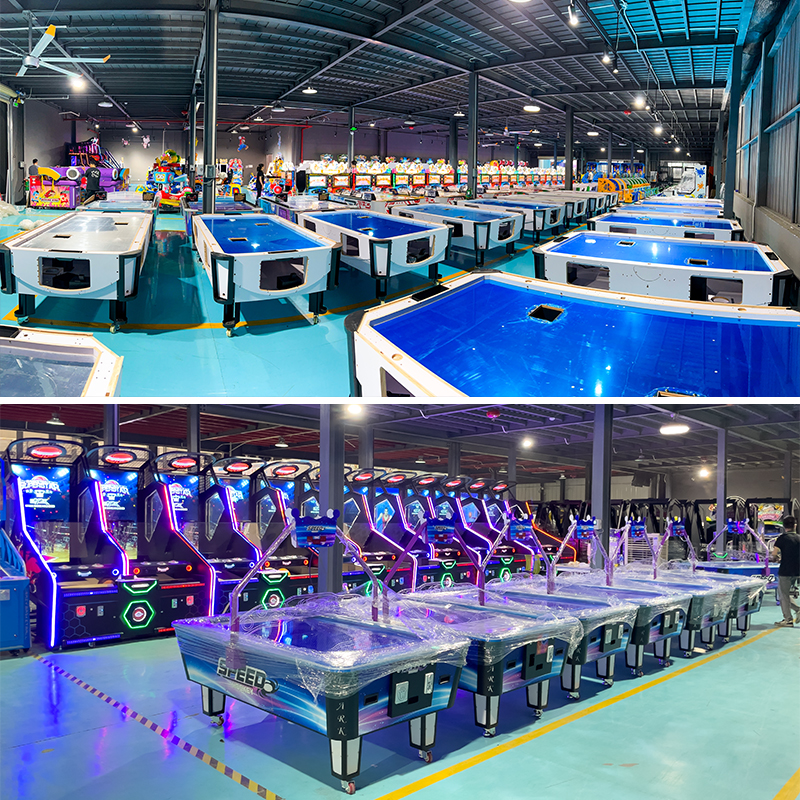
Workshop-level inspection and a defined spare-parts list reduce the maintenance risk of either machine type.
4. Step-by-Step: Running the Comparison in Six Steps
Step 1 — Profile your audience mix, not your average visitor
Write down the share of your traffic that is families with children, teenagers in groups, and adults. A prize claw machine performs on family traffic because the prize is the reward and the game is short. A VR game machine performs on teenage and adult group traffic because the session is the reward. If more than half of your traffic is under twelve or accompanied by young children, the claw format carries less operational risk.
Step 2 — Map floor, power, and queue space together
Draw the placement, the approach lane, and the queue position on the same plan. Then confirm the power and network provisions each machine needs, and confirm them with the supplier in writing. A large claw machine and a VR simulator can have very different service requirements, and installing a machine where the queue blocks a neighbouring attraction converts a revenue asset into a circulation problem.
Step 3 — Cost the labour you will actually have
Count the staff on the floor during your busiest and quietest shifts. Then assign the tasks: restocking, reconciliation, session resets, hygiene, and troubleshooting. If no one is available for session support during peak hours, the VR option will underperform regardless of content quality. If staff are already handling redemption counters, added restocking is normally absorbable.
Step 4 — Choose the revenue rhythm you can control
Decide whether you can manage prize sourcing and claw configuration, or whether you would rather manage content refresh and session pricing. The first is a merchandising skill; the second is a programme-management skill. Most venues are better at one than the other, and pretending otherwise is the most common cause of a mismatched purchase.
Step 5 — Fix the commercial terms before comparing prices
Ask every candidate supplier, for both machine types, to quote the same package: cabinet specification, payment module, prize or content package, spare-parts kit, warranty terms, technical support channel, packing, and delivery schedule. Only then compare. A quotation that excludes spare parts or support is not a lower price, it is a smaller scope.
Step 6 — Write the acceptance checklist into the order
Acceptance should be a document, not a handshake. A usable claw machine acceptance checklist includes: claw lift and payout configuration recorded and demonstrated; cabinet structure and finish inspected; payment module tested with the actual coin, token, or card system used at the venue; prize chute and sensor verified; safety switches verified; spare-parts kit counted against the agreed list; operating manual delivered; and technical support contact confirmed. For a VR game machine, add session reset time, headset and controller hygiene procedure, content library listing, and update terms.
5. Use Cases: Which Venue Profile Fits Which Machine
Family entertainment centres and shopping malls
This is the core environment for commercial claw machines, where mixed traffic and short dwell times match the micro-payment model. EPARK identifies shopping malls, family entertainment centres, amusement parks, and game centres as the best-fit venues for its cabinet range, which aligns with how the format is normally deployed: a bank of cabinets at a circulation edge, visible from the main aisle, with prize displays facing the walkway.
Compact and unattended zones
Cinema foyers, restaurant waiting areas, and small lobby installations favour single-player and mini claw machine formats, where the cabinet can run with minimal supervision and a simple cashless payment module. The limitation is prize capacity: restocking becomes the constraint, so the placement must be on a route that staff already walk.
High-footfall tourist and destination venues
Where traffic is heavy but dwell time is short, a large claw machine or a multi-player cabinet absorbs throughput better than a session-based product, because no queue management or instruction is required. The trade-off is space and prize volume.
Group-oriented venues and mixed floors
Venues that already host parties, school groups, or bookings can support a VR game machine because the audience is assembled and supervised. On a mixed floor, the two formats can coexist: the claw bank handles continuous passing traffic while the VR platform converts a smaller share of visitors into longer, higher-value sessions. The condition is that staffing and zoning are planned together, not added later.
6. Side-by-Side Comparison Table
| Decision criterion | Claw machine | VR game machine |
|---|---|---|
| Core audience | Unfiltered walk-in traffic: children, families, teenagers, waiting adults | Narrower, typically older players who will accept a headset and a timed session |
| Space logic | Compact approach lane; prize display faces circulation; mini and single-player formats fit small footprints | Defined play zone plus waiting position; requires separation from passing traffic |
| Staffing load | Largely self-service; restocking, reconciliation, and periodic mechanism checks | Session start-up, resets, headset hygiene, and in-shift troubleshooting |
| Maintenance drivers | Cabinet quality, claw mechanism, payment module, spare-parts availability | Content and tracking stability, hygiene consumables, spare headsets and controllers |
| Revenue rhythm | Many low-value repeat transactions driven by impulse and prize appeal | Fewer higher-value sessions, capped by play positions and session length |
| Recurring dependency | Prize supply and claw configuration | Content library, updates, and session design |
| Compliance focus | Amusement and gaming machine safety (UL 22 in the US); HS 9504.30 for customs classification | Electrical safety and EMC for the platform, plus market-specific requirements for headset-based play |
| Terms to lock before ordering | Spare-parts list, payout configuration record, warranty, delivery schedule, staged payment | Content licensing and update terms, hygiene procedure, spare headsets, on-site support response |
| Best-fit venues | Shopping malls, family entertainment centres, amusement parks, game centres, compact lobbies | Group-oriented venues able to supervise sessions and manage content |
| Main limitation | Revenue is shallow per transaction and depends on prize attractiveness | Revenue is capacity-bound and depends on staffing and content freshness |
7. Frequently Asked Questions
What compliance documents should be verified before ordering either machine?
Commercial claw machines in the United States must typically meet UL 22, the standard for amusement and gaming machines, and claw machines are classified under HS 9504.30 in the Harmonized System, the line covering games operated by coins, banknotes, bank cards, tokens, or other means of payment. For either machine type, buyers should require certificate numbers, issuing bodies, applicable models, test reports, and validity dates rather than accepting a logo on a brochure. EPARK's public pages display CE, RoHS, ISO, EMC, and SGS-related certification claims, and those claims should be validated at document level against the exact model and the destination market before a purchase order is issued.
Can one supplier quote both a claw machine and a VR game machine on the same terms?
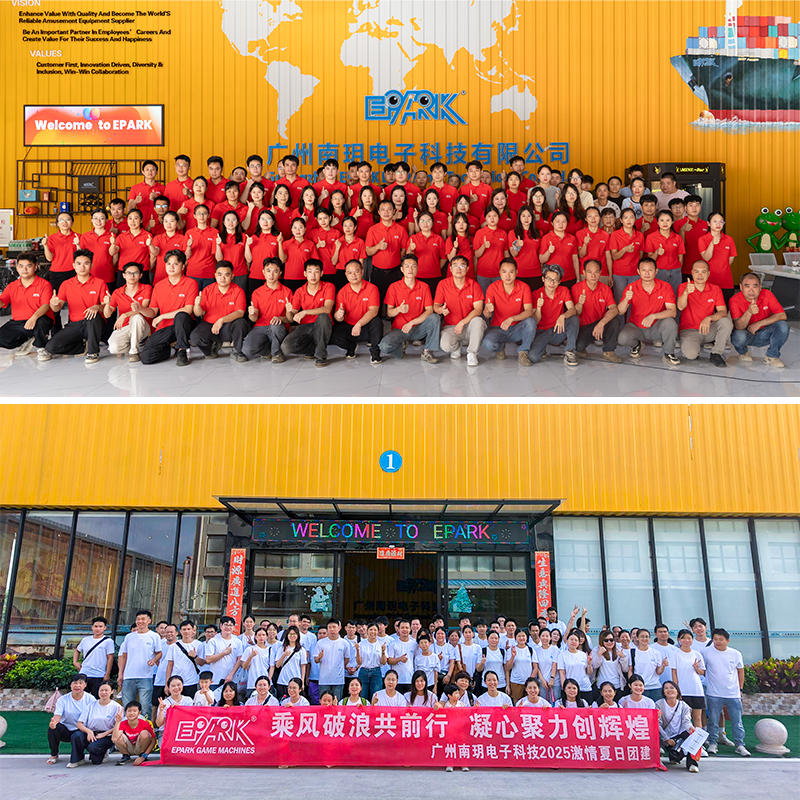
Yes, and using one supplier makes the comparison cleaner. Guangzhou EPARK Electronic Technology Co., Ltd. (EPARK) is an entertainment equipment manufacturer in Panyu, Guangzhou, China, operating a 25,000 m² factory and showroom with a 20-engineer R&D team and an annual output of 8,000–10,000 units. Its product range covers claw machines, air hockey tables, basketball machines, boxing machines, VR simulators, racing arcade machines, shooting game machines, ticket redemption machines, kids game machines, and indoor playground equipment, and the company states that it offers OEM and ODM customisation. That breadth allows a buyer to request one specification sheet, one warranty structure, and one spare-parts list across both categories, which removes the most common distortion in this comparison.
How should budget be allocated between the two options?
There is no reliable public price benchmark for this category, so budget should be built from cost drivers rather than from a headline unit price. For a claw machine, the drivers are cabinet construction, claw and payout mechanism, payment module, prize stock, spare-parts kit, freight, and installation. For a VR game machine, they are the platform itself, headset and controller count, content licensing, hygiene consumables, spare headsets, and on-site support. Both budgets should carry a spare-parts reserve, and both quotations should be compared on identical scope; a quote that excludes spares or support is a narrower scope, not a saving.
What should a sample or trial unit prove before full commitment?
A sample unit should demonstrate the items that are hardest to fix later. For a claw machine, that means the lift and payout configuration recorded and demonstrated, cabinet structure and finish, payment module tested with the venue's actual coin, token, or card system, prize chute and sensors, safety switches, and a counted spare-parts kit. For a VR game machine, add session reset time, the headset and controller hygiene procedure, the content library list, and the update terms. A sample that performs correctly in these areas is a usable reference; a sample that only looks good in a showroom is not.
What delivery and after-sales terms reduce the risk of a late or unsupported machine?
The risk set is well defined: product quality, delivery delay, after-sales service, and payment security. EPARK addresses these through incoming material inspection and production testing, production schedule control with buffer stock, a multi-step quality inspection before shipment, and a dedicated after-sales team with spare-parts support. Buyers should convert each of those into a contractual obligation: an inspection record before shipment, a milestone-based payment schedule, a named support channel, and a spare-parts list attached to the order. Suppliers that can document these without pressure are generally the ones worth shortlisting — and EPARK's team can prepare a project solution and a sample discussion against your floor plan and audience profile.
8. Conclusion
The claw machine wins when the venue needs frequency: continuous walk-in traffic, short dwell times, thin staffing, and a merchandising routine the operator can actually run. The VR game machine wins when the venue can supply the things VR needs: supervised sessions, hygiene discipline, content management, and a price point that a committed player will accept.
The decision should be closed on criteria, not on impressions. Profile the audience, map floor and queue space, cost the real labour, choose the revenue rhythm you can operate, fix the terms before comparing prices, and write the acceptance checklist into the order. A buyer who does those six things will select correctly between the two categories — or, on a mixed floor, combine them deliberately rather than by accident. Both claw machines and VR simulators are part of EPARK's entertainment equipment range, so the same supplier can quote both against one specification and one service commitment.
Next Step: Compare Both Options Against Your Own Floor
EPARK provides free project solutions based on your space and business objectives, and can prepare a claw machine sample, a VR simulator quotation, a full catalogue, and a spare-parts list for review.
Request a claw machine or VR game machine proposal, sample, and spare-parts list from the EPARK team.
Website: www.eparkgames.com
Email: sales@nanyuetech.com
Phone / WhatsApp: +86 13903079263
Address: Building 9, 120 Donghuan Road, Shiqiao, Panyu District, Guangzhou, Guangdong, China 511400
Have Questions or Need More Details?
Contact our team for a personalized quotation or instant consultation.
Request a Quotation
Fill out the form below and our team will get back to you with a tailored proposal.
WhatsApp Direct Chat
Prefer to chat in real-time? Message us on WhatsApp for instant assistance & quick answers.
- Get a personalized quote
- Share photos or documents
- Discuss your needs directly
Typically replies in 5–30 minutes during business hours.