Space and Budget First: Claw Machine vs. VR Game Machine
When an arcade or family entertainment center (FEC) operator has one usable corner and one capital line for a single new attraction, the real question is not which machine is better in general. It is which machine survives the venue's constraints: connected electrical load, supervision available during trading hours, the audience already walking past the door, and the recurring cost of whatever the machine must hand out or run.
This guide works through that decision in the order an operator actually faces it — constraints first, machine second. Two EPARK models are used as reference points because their published specifications sit at opposite ends of the load spectrum: the EPARK EP-G001 claw machine, a single-player coin operated claw machine rated 120–200W, and the EPARK EP-VR096 VR game machine, a one-to-two-player VR simulator rated 800–1500W with an optional static, 2DOF or 3DOF motion system. Both are CE certified. Every checkpoint below is built from their published parameters, not from a preference for either category.
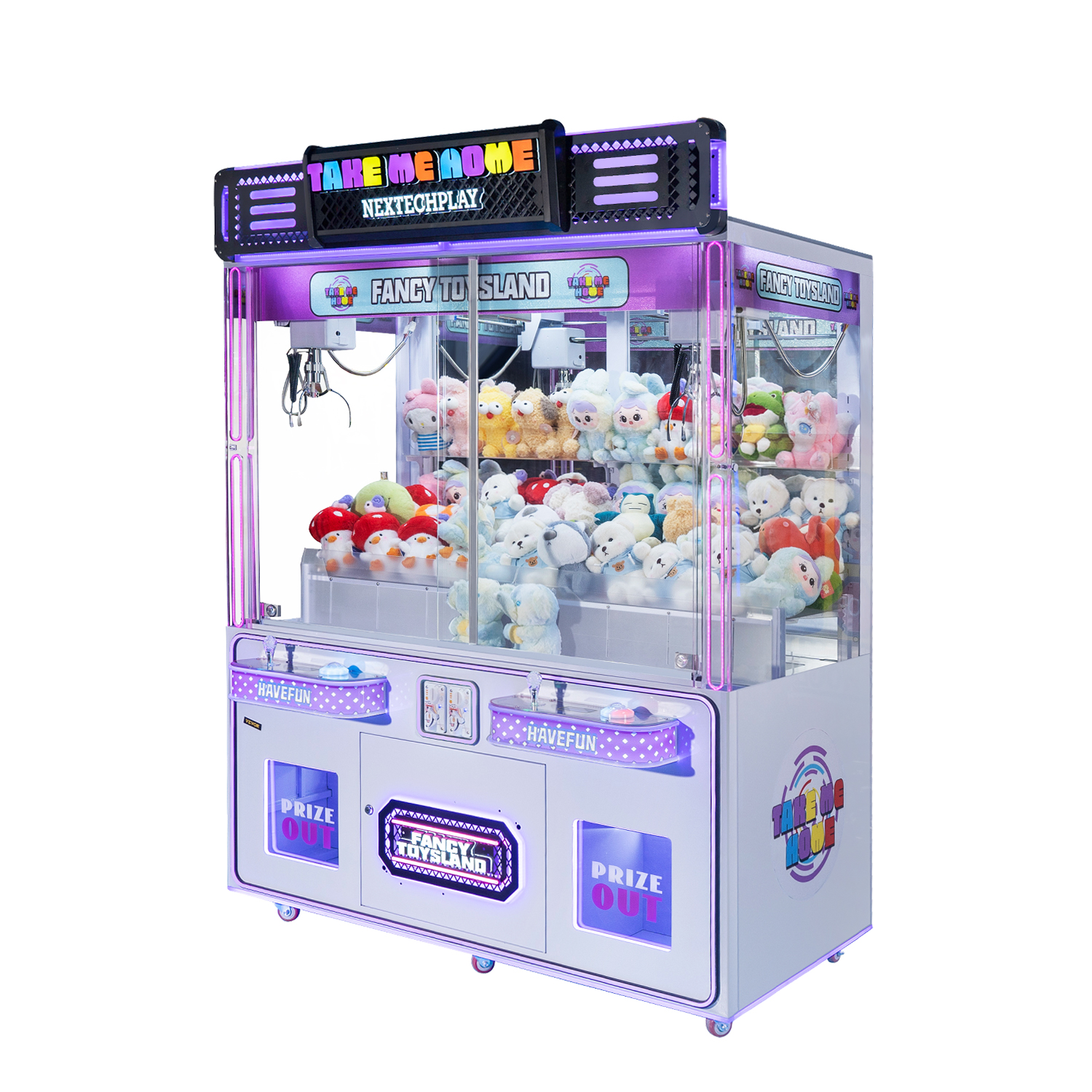
Claw machines such as the EPARK EP-G001 are single-player, 120–200W units with an adjustable claw, LED lighting, a transparent cabinet and a prize display system.
The Problem: Two Attractions, One Constraint Set
The comparison fails most often because operators compare brochures. A VR machine is assessed on immersion, a claw machine on cuteness of prizes, and neither is assessed against the venue. A better method is to write down the constraint set before looking at any catalogue, then accept a machine only if it clears every item on the list.
Six constraints decide the outcome in most small and mid-size venues:
- Electrical headroom. What the existing circuit can support without a distribution upgrade, and whether the machine's rated power fits that margin.
- Footprint and sight line. Whether the corner reads as a destination from the walkway, and whether the cabinet blocks an existing traffic path.
- Supervision. How many staff are on the floor and how often they can reset, restock or assist.
- Audience and session expectation. Whether the people passing the corner want a short impulse play or a deliberate sit-down experience.
- Recurring operating cost. What the machine consumes every trading day — prize inventory, content, wear parts, or electricity.
- Compliance paperwork. Whether the certificates on file actually cover the model being delivered into the target market.
The claw machine typically wins on constraints one, three and five. The VR machine typically wins on constraint four in venues that already have an experience-seeking audience. If both clear the same six constraints, the decision falls to a second layer: which one produces a better revenue-to-constraint ratio in that specific corner.
Industry Background: Why Both Categories Still Have Room
Claw machines remain a large, expanding category rather than a legacy one. Dataintelo and Verified Market Research value the global claw machine market at roughly USD 2.66 billion to USD 2.8 billion in 2024–2025, with projections above USD 5.1 billion by 2032–2034. Global Information (GII) publishes a lower 2024 estimate of about USD 2.0 billion, so the honest reading is a multi-billion-dollar category with a double-digit growth trajectory rather than a single precise figure.
The same research shows where that volume sits. Asia Pacific accounted for a 42.7% revenue share in 2025, driven by demand in China, Japan and South Korea, and middle-type claw machines held the largest type segment at 44.2% of the global market in 2025. China's Panyu district in Guangzhou is widely identified as a manufacturing cluster for these machines, and EPARK operates from Panyu with a 25,000 m² showroom and factory, 150 employees and 20 engineers.
The VR side of the comparison does not carry equivalent published category data in this material, and no figure is asserted here. Its differentiation is at the hardware level: headset brand optional between HTC and Pico, a 42–55 inch HD display, motion system optional between static, 2DOF and 3DOF, and 20–50 VR games included. Those options are the reason a VR quotation can move significantly between otherwise similar-looking units, and the reason the configuration must be fixed in writing.
The Detailed Answer: Match the Machine to the Constraint, Not the Trend
Claw machine profile: EPARK EP-G001
The EP-G001 is a coin operated claw machine built for one player at a time. Published parameters: power 120–200W, voltage 110V or 220V, adjustable claw strength, LED lighting with a transparent cabinet, a prize display system, and payment support for coin, bill, card or QR. Construction is a metal cabinet with tempered glass, a claw system and an electronic control system. It is CE certified and is applied in shopping malls, arcade centers, FECs and amusement parks.
VR game machine profile: EPARK EP-VR096
The EP-VR096 is a coin operated VR simulator for one to two players. Published parameters: power 800–1500W, voltage 110V or 220V, a 42–55 inch HD display, headset optional between HTC and Pico, motion system optional between static, 2DOF and 3DOF, and 20–50 VR games included. Payment support covers coin, card or QR. Construction is a metal frame with a fiberglass shell, VR system, motion platform and electronic control system. It is CE certified and is applied in shopping malls, VR experience centers, FECs and amusement parks.
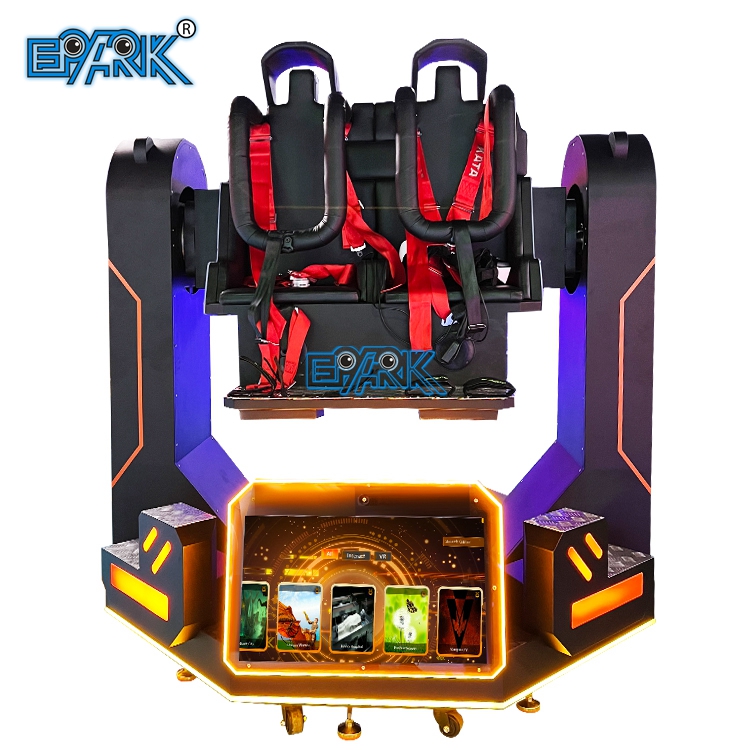
The EPARK EP-VR096 is rated 800–1500W with a 42–55 inch HD display, optional HTC or Pico headset and optional static, 2DOF or 3DOF motion.
Where the two profiles diverge operationally
Connected load. The VR unit's published range of 800–1500W sits several times above the claw machine's 120–200W. In a venue where the corner is fed from an existing circuit and no distribution work is budgeted, this single number often settles the question before any commercial discussion begins.
What the machine consumes every day. A claw machine's recurring cost is prize stock — plush, gifts or capsules — replenished and arranged inside a transparent cabinet with a prize display system. A VR machine's recurring cost sits in its content and hardware: a 20–50 game library, a headset, and a motion platform that needs to stay calibrated and maintained.
Supervision and reset. A single-player claw machine with coin, bill, card and QR payment can trade through long unattended periods, with staff intervention limited to prize restocking and jam clearing. A VR unit involves headset handling, player onboarding and a motion platform, so it usually sits where staff already circulate.
Configuration risk. A claw machine's configuration variables are comparatively narrow — voltage, plug type, cabinet design, colour, logo, payment and language. A VR quotation carries headset brand, motion type and game count, all of which change cost and capability. Locking these options into the purchase order is the difference between comparing two machines and comparing two vague descriptions.
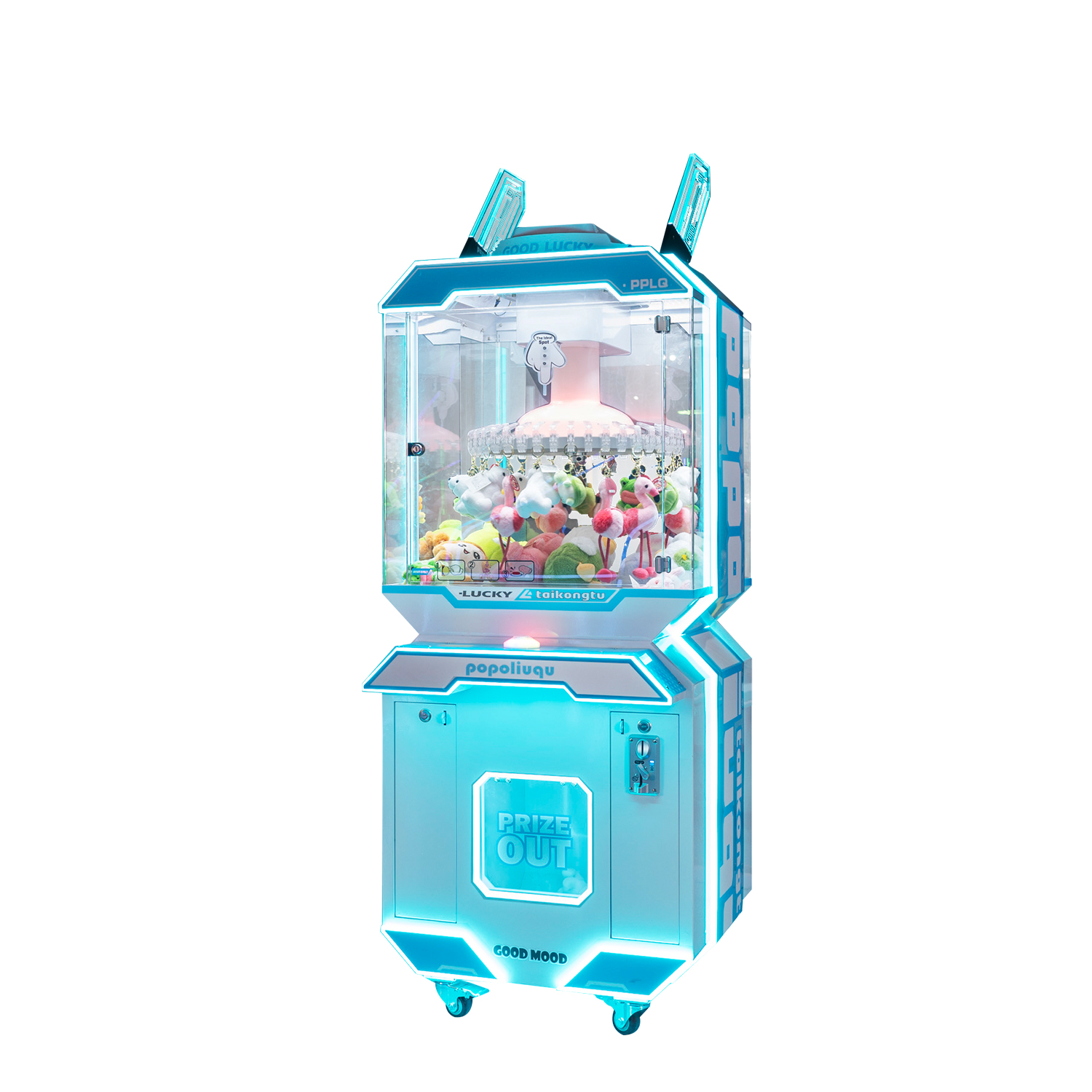
Prize inventory is the claw machine's recurring operating cost; the transparent cabinet and prize display system are what convert walk-by traffic into a play.
Step-by-Step: A Five-Check Decision Path
Step 1 — Write the constraint set in numbers
Record available power at the corner, the number of staff on shift, the trading hours, the budget band, and the audience the venue already attracts. This becomes the acceptance sheet that both machines are measured against, and it prevents a preference formed in another venue from deciding this one.
Step 2 — Classify the venue, then read its published requirement
Venue type carries its own requirement profile. A shopping mall arcade corner is defined by high foot traffic, short-stay impulse consumption, and a demand for eye-catching design, compact size and high return per square metre, usually on a coin or card system. A family entertainment center is a multi-zone environment with high daily usage, where the goal is extending family dwell time across air hockey, VR, kids games, redemption and soft play, typically on a card or cashless system. An arcade game center is a high-traffic, long-hours operation that prioritises durability, easy maintenance and customizable branding for continuous use.
A short-stay, high-traffic mall corner maps to the claw machine. A multi-zone FEC that already carries family traffic can justify either, and the VR unit earns its place when it anchors a zone rather than standing alone. A high-volume arcade normally uses claw machines as repeatable volume and a VR unit as a headline attraction.
Step 3 — Test the audience against the session the machine creates
Ask what the customer does in the first thirty seconds. A claw machine asks for a coin or card tap, a short aim and a result the player can see through the glass — a low-commitment interaction that suits mixed traffic, families with young children and passers-by. A VR machine asks for a seat, a headset, a briefing and a session inside one of 20–50 games — a deliberate decision that suits destination traffic and groups willing to queue. Neither behaviour is superior; only one matches the venue's existing flow.
Step 4 — Verify the compliance file against the model being delivered
"CE certified" is a claim; a certificate number and scope is evidence. For EPARK's claw machine line, CE certificate ACIC20240201019GRC was issued by ACIC on 2024-02-06 for Gift Game Machine scope under EN IEC 61000-6-1:2019, EN IEC 61000-6-3:2021, EN IEC 61000-3-2:2019+A1:2021 and EN 61000-3-3:2013/A1:2019/A2:2021. A separate CE certificate, ACIC20250604011CET, covers Amusement Machine Series and was issued on 2025-06-04. RoHS certificate ACIC20190422059BHN, issued by ACIC on 2019-04-24, covers Game Machines under the IEC 62321 series.
Beyond the manufacturer's file, buyers in public venues should also ask about IEC 60335-2-82, the IEC standard that specifically covers the safety of amusement machines and personal service machines for public use. When comparing a claw machine against a VR machine, check that each certificate names the delivered model or a scope that clearly includes it, and that the electrical ratings on the nameplate match the quotation.
Step 5 — Lock commercial terms and an acceptance checklist
Commercial terms decide whether the machine arrives usable. EPARK's published terms are: OEM, ODM, factory direct and custom design supported; customization across voltage, plug type, cabinet design, colour, logo, game software, payment system and language interface; monthly capacity 500–800 units; lead time 30 days; minimum order quantity 10 units; 100% quality inspection before shipment with aging test and function test; and after-sales support covering 24/7 online assistance, video technical guidance, spare parts supply and lifetime maintenance.
Sign off at delivery against a written checklist: model number, voltage and plug type match the purchase order; the payment module operates in the venue's real mode (coin, bill, card or QR); the claw strength setting or the VR motion configuration and game list match the order; certificate copies name the delivered scope; the spare parts list and support channel are confirmed; and the aging test and function test records have been reviewed before shipment.
Use Cases: Three Corners, Three Answers
A mall corner with limited power and one attendant
A shopping mall arcade corner with short-stay impulse traffic and a single attendant fits the claw machine model. A 120–200W single-player unit with coin, bill, card and QR payment, a transparent cabinet and an adjustable claw runs on modest power and needs staff only for prize restocking and jam clearing. The machine's job is converting walk-by traffic at high frequency, not holding a customer for a long session.
An FEC adding an anchor to a multi-zone floor
A family entertainment center built around extended dwell time, multi-age compatibility and card or cashless payment can carry the VR unit as an anchor, provided the electrical budget covers 800–1500W and staff can manage headset handling. The 42–55 inch HD display, optional motion platform and 20–50 game library give the floor a headline attraction that a row of claw machines does not attempt to be.
An arcade center building a mixed floor
A long-hours arcade center that prioritises durability and easy maintenance usually treats the claw machine as volume — several units, each with prize stock and its own cabinet identity, customized with logo and colour — and places one or two VR units at the entrance as the visual anchor. EPARK's documented arcade startup deployments in the 30–80 machine range, and its 80+ machine commercial arcade installations, report payback within 3–6 months; those are supplier-reported case results from venues with strong footfall and should be treated as best-case planning references, not as a forecast for a specific site.
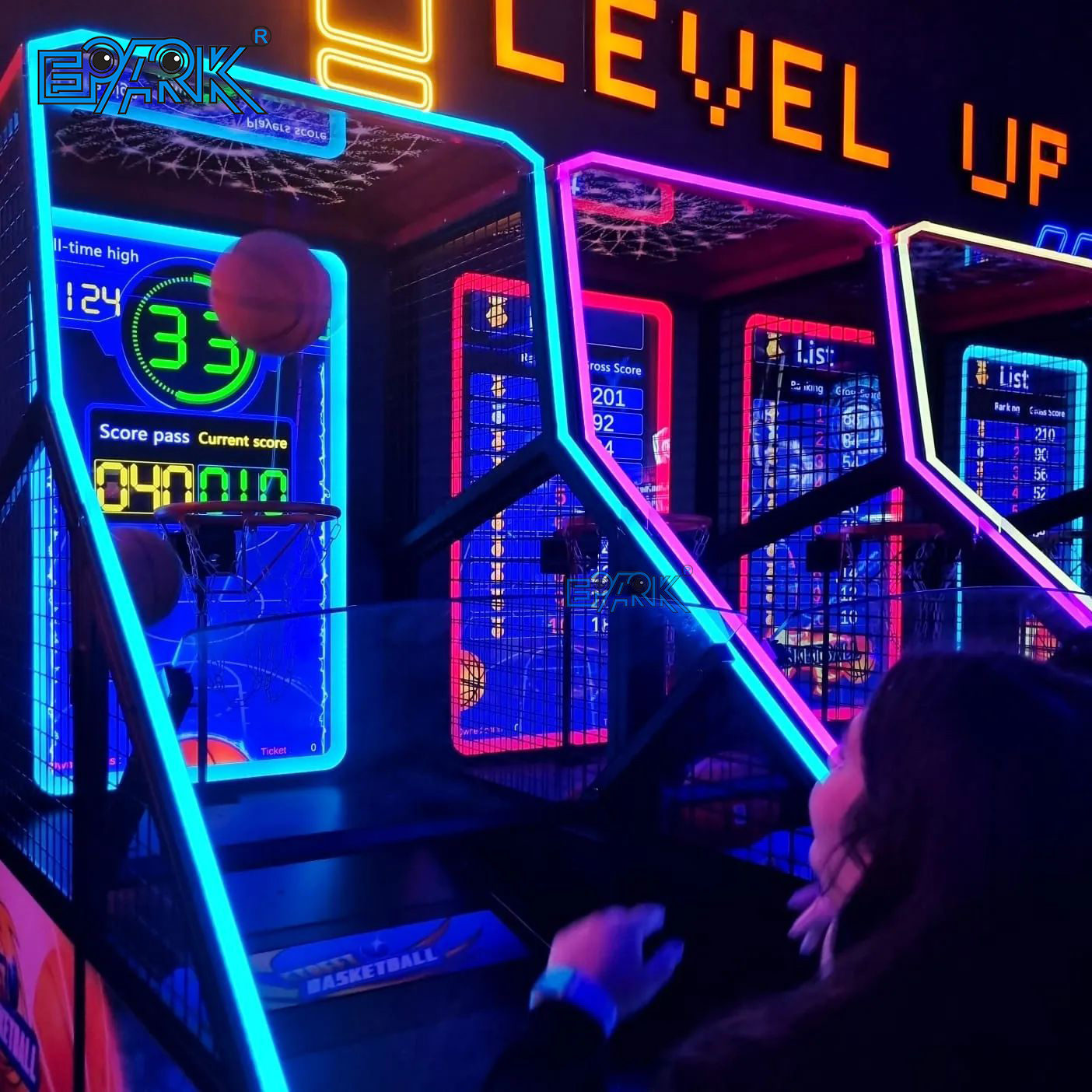
Arcade centers typically mix machine types: claw machines as repeatable volume, VR units as the entrance anchor.
Comparison Table: Published Facts Side by Side
| Comparison point | Claw Machine — EPARK EP-G001 | VR Game Machine — EPARK EP-VR096 |
|---|---|---|
| Machine type | Coin operated claw machine | Coin operated VR simulator |
| Players per session | 1 player | 1–2 players |
| Rated power | 120–200W | 800–1500W |
| Voltage | 110V / 220V | 110V / 220V |
| Core interaction | Adjustable claw strength, transparent cabinet, LED lighting, prize display system | 42–55 inch HD display, HTC or Pico headset optional, static / 2DOF / 3DOF motion optional, 20–50 VR games |
| Payment support | Coin / bill / card / QR | Coin / card / QR |
| Construction | Metal cabinet, tempered glass, claw system, electronic control system | Metal frame, fiberglass shell, VR system, motion platform, electronic control system |
| Certification | CE certified (CE certificate ACIC20240201019GRC for Gift Game Machine scope) | CE certified |
| Recurring operating input | Prize stock inside the cabinet | Game library, headset, motion platform maintenance |
| Typical published application | Shopping malls, arcade centers, FEC, amusement parks | Shopping malls, VR experience centers, FEC, amusement parks |
| Customization scope (supplier level) | Voltage, plug type, cabinet design, colour, logo, game software, payment system, language interface | |
| MOQ / lead time (supplier level) | 10 units / 30 days | |
All values are the manufacturers' published parameters for the two named models; supplier-level customization, MOQ and lead time apply to EPARK orders generally.
Frequently Asked Questions
1. What certification should a claw machine or VR game machine carry before installation in an EU venue?
Look for a CE certificate whose scope names the delivered machine type, plus RoHS documentation. EPARK's claw machine line is covered by CE certificate ACIC20240201019GRC issued by ACIC on 2024-02-06 for Gift Game Machine scope under EN IEC 61000-6-1:2019, EN IEC 61000-6-3:2021, EN IEC 61000-3-2:2019+A1:2021 and EN 61000-3-3:2013/A1:2019/A2:2021, and RoHS certificate ACIC20190422059BHN issued on 2019-04-24 covering Game Machines under the IEC 62321 series. The EP-VR096 VR game machine is CE certified per its published specification. Public-venue buyers should also request confirmation against IEC 60335-2-82, the IEC standard that specifically addresses the safety of amusement machines and personal service machines for public use, and verify that the nameplate ratings match the quotation.
2. Can one supplier deliver both machine types with the same payment and voltage configuration?
Yes, within the published customization scope. EPARK supports voltage, plug type, cabinet design, colour, logo, game software, payment system and language interface customization across its machine range. The EP-VR096 supports coin, card or QR payment, and the EP-G001 supports coin, bill, card or QR, so a card-based FEC floor and a coin-based arcade corner can both be configured within the same order. Both models are offered in 110V and 220V. Because configuration options such as headset brand and motion type change the unit, they should be fixed line by line in the purchase order rather than agreed verbally.
3. What drives the operating cost difference between the two machines?
Three inputs dominate. First, connected load: the VR unit's published 800–1500W range is several times the claw machine's 120–200W, which shows up in both circuit planning and running cost. Second, consumables: a claw machine consumes prize stock, while a VR machine consumes content and headset wear and needs motion platform maintenance. Third, revenue cadence: a claw machine earns from frequent short plays, while a VR machine earns from fewer, longer sessions. For payback expectations, third-party research (SkyQuest, Arcade Game Machines Market Research) puts typical ROI for a well-placed commercial claw machine at 12–24 months depending on foot traffic and operational efficiency, while EPARK's own case records for arcade deployments report 3–6 months — treat supplier cases as best-case and model the specific site.
4. Can an operator order a small mixed batch to test both machines before committing to a full floor?
EPARK's published minimum order quantity is 10 units, which allows a mixed first batch instead of a single-machine trial. A test batch can combine claw machine units and VR units so both revenue behaviours are measured in the same venue. Before shipment, each unit passes 100% quality inspection with aging test and function test, and buyers can review those records as part of acceptance. To plan a mixed trial batch and confirm configuration details for the target market, contact the EPARK team at sales@nanyuetech.com or through eparkgames.com.
5. What is the lead time and production capacity for a combined order?
EPARK publishes a 30-day lead time and a monthly capacity of 500–800 units, with OEM, ODM, factory direct and custom design production modes. Customization covers voltage, plug type, cabinet design, colour, logo, game software, payment system and language interface, and after-sales support includes 24/7 online assistance, video technical guidance, spare parts supply and lifetime maintenance. For venues opening on a fixed date, the practical sequence is to confirm the configuration and certification scope first, then place the order, because late specification changes are what usually move a delivery date.
Conclusion: Decide With the Constraint Sheet, Not the Brochure
The claw machine and the VR game machine solve different problems. A 120–200W single-player claw machine with an adjustable claw, transparent cabinet and prize display system fits a tight corner where power is limited, supervision is thin and traffic is short-stay. An 800–1500W VR simulator with a 42–55 inch HD display, optional motion platform and a 20–50 game library fits a floor that already holds customers long enough to justify a headline attraction — and has the electrical capacity to carry it.
The decision method matters more than the answer. Fix the six constraints, classify the venue, test the audience, verify the certificate scope against the delivered model, and lock the commercial and acceptance terms. Operators who follow that order usually discover the choice was made for them by the second step — and the remaining work is configuration, not deliberation.
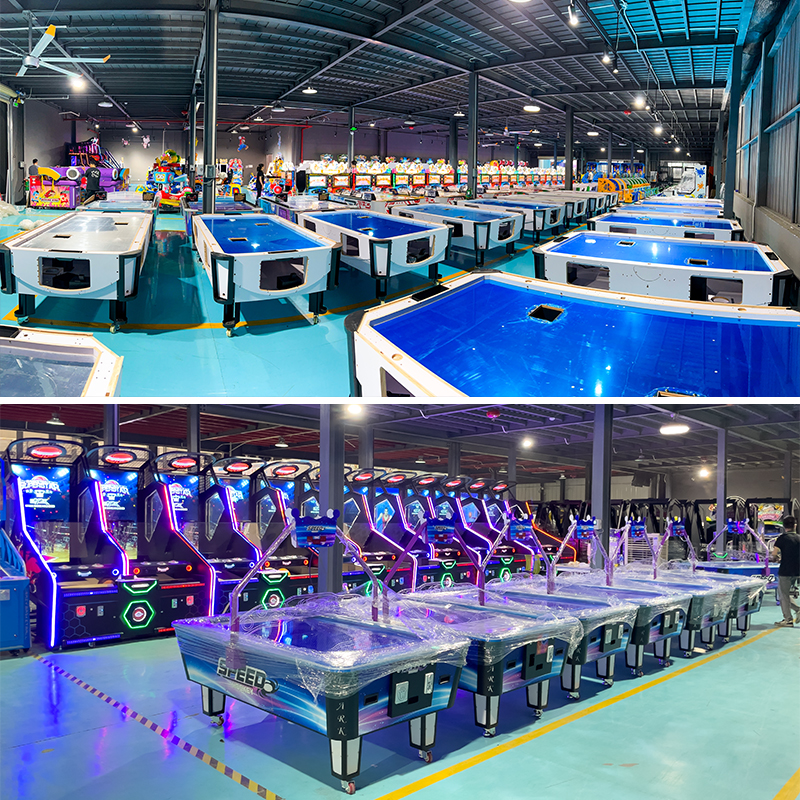
EPARK manufactures in Panyu, Guangzhou, with 100% inspection, aging test and function test before shipment.
Next step for operators comparing the two formats: send EPARK your venue type, available power and target audience, and request a configuration and quotation for the EP-G001 claw machine, the EP-VR096 VR game machine, or a mixed batch starting from the 10-unit MOQ. Contact: www.eparkgames.com · sales@nanyuetech.com · +86 13903079263.
Have Questions or Need More Details?
Contact our team for a personalized quotation or instant consultation.
Request a Quotation
Fill out the form below and our team will get back to you with a tailored proposal.
WhatsApp Direct Chat
Prefer to chat in real-time? Message us on WhatsApp for instant assistance & quick answers.
- Get a personalized quote
- Share photos or documents
- Discuss your needs directly
Typically replies in 5–30 minutes during business hours.