Coin Operated vs Ticket Redemption Machine: Technical Guide
A coin operated game machine and a ticket redemption machine can share the same steel cabinet, the same tempered glass, the same 110 V / 220 V power input and the same CE certification — and still behave completely differently the moment a customer inserts money.
The difference is what the payment converts into. On a coin operated game machine, payment converts into play time. On a ticket redemption machine, payment converts into play time plus a measurable payout — tickets — that physically leaves the cabinet and becomes a line item inside your prize counter budget.
That single structural difference moves three operational parameters that decide whether a cabinet earns back its cost: the payback percentage the machine is configured to return, the ticket output mechanics that turn gameplay into prize cost, and the maintenance requirements created by payout hardware.
This guide compares the two categories across those three parameters, using the published specifications of EPARK (Guangzhou EPARK Electronic Technology Co., Ltd.), a Guangzhou-based arcade machine manufacturer with a 25,000 m² factory and showroom and an 80% export ratio.
Problem Definition: Why Buyers Keep Confusing the Two Categories
The confusion is structural, not careless. Supplier catalogues, trade-show booths and procurement portals routinely place coin operated games and ticket redemption games in the same category because they share the same enclosure logic: a metal cabinet, tempered glass, ABS plastic components, electronic parts and LED lighting. Both run on 110 V / 220 V. Both list amusement parks, arcade centers, family entertainment centers and shopping malls as application venues.
The divergence only becomes visible further down the specification sheet, and that is exactly where procurement mistakes are made.
- The Ticket Redemption Machine (EP-L001) lists a ticket payout system, 1–2 players, a 200–500 W power range, and coin / card / QR payment, with CE certification.
- The Coin Operated Game Machine (EP-SP062) lists multiple game types — claw, racing, shooting, sports and kids — across a 100–1500 W band depending on model, and lists coin / bill / card / QR payment. No ticket payout system appears in its specification.
- Payment interface lists are not identical either. EP-SP062 accepts coin, bill, card and QR. EP-L001 accepts coin, card and QR.
The operative question is not “which cabinet is better?” It is: which payout architecture does my prize counter, card system and staffing model actually support? Buyers who skip that question usually discover the mismatch after installation — when the redemption counter has no ticket inventory plan, or when a direct-play floor has no prize strategy to sustain repeat spending.
Industry Background: Why the Split Matters in 2026
Both categories sit inside a market that is still expanding. Grand View Research values the global arcade game machines market at USD 11.0 billion in 2025 and projects growth to USD 31.0 billion by 2033.
Redemption-style equipment is not the niche inside that market — it is the leading segment. Grand View Research reports that redemption games led the arcade market with a 29.2% revenue share in 2025, driven by the popularity of prize-rewarding machines in family entertainment centers.
Prize-merchandise formats are large in their own right. Dataintelo values the global claw machine market at USD 2.8 billion in 2025, with Asia Pacific accounting for 42.7% of total revenue.
Supply is heavily concentrated in China. UN Comtrade data shows China’s exports of toys, games and sports requisites reached US$82.4 billion in 2024. That export base is precisely why this technical comparison matters: two cabinets from two suppliers can look identical on a render while carrying different payout hardware, different payment modules and different compliance documentation.
At the global brand level, the recognized players in the arcade machine space include Bandai Namco, Sega and Konami of Japan, and Raw Thrills of the United States. Chinese manufacturers such as EPARK serve the mid-volume and project-volume segment, producing between 8,000 and 10,000 units per year with a 20-engineer R&D team and a 150-person workforce.
The Three Operational Parameters That Decide the Choice
Parameter 1 — Payback Percentage Is a Configuration, Not a Category
Payback percentage describes the proportion of player spending that a cabinet returns to players. On a direct-play coin operated machine, that return is intangible: play time, score, competition, the experience itself. On a redemption machine, the return is measurable and carries a hard cost, because tickets are exchanged for prizes that you purchased.
That is the first practical consequence of choosing redemption hardware: payback percentage becomes an accounting input, not just a game-design preference. It determines how much of gross collection must be reserved for the prize counter before any machine-level margin is calculated.
On a merchandise-prize machine such as the Claw Machine (EP-G001), the equivalent control is mechanical rather than digital. The published specification lists adjustable claw strength and a prize display system, which means the operator controls hold behaviour — and therefore how quickly the merchandise inventory inside the transparent cabinet is consumed. Prize cost per play is set by the cabinet, not by a counter.
Practical rule: do not accept a payback percentage as a fixed property of a machine category. Ask what is adjustable, confirm the adjustment mechanism in writing, and validate the setting on a sample unit before committing a full floor.
Parameter 2 — Ticket Output Mechanics
Ticket output mechanics describe the chain that runs from payment to recognised prize cost. The chain has seven links, and every one of them is a place where a procurement assumption can break:
- Payment accepted — coin, bill, card or QR.
- Game mode selected — the cabinet may offer several.
- Player completes the play cycle.
- Result is scored by the cabinet’s electronic system.
- Tickets are awarded according to the configured schedule.
- The ticket payout system dispenses the physical tickets.
- The player redeems tickets at the counter, and prize cost is recognised.
The Ticket Redemption Machine (EP-L001) lists a ticket payout system, LED lighting and sound effects, multiple game modes, 1–2 players, 200–500 W and 110 V / 220 V input, with CE certification. Those parameters define throughput: how many players can occupy the cabinet at once, how frequently it cycles, and how much electrical load the venue must carry.
For a multi-cabinet redemption zone, power planning is not a rounding exercise. EPARK’s sport, redemption and simulator cabinets span a wide band:
- Commercial Kiddie Ride (EP-K001) — 80–150 W
- Dart Machine (EP-SP086) — 100–300 W
- Claw Machine (EP-G001) — 120–200 W
- Boxing Arcade Machine (EP-SP010) — 150–300 W
- Kids Arcade Game Machine (EP-A001) — 150–300 W
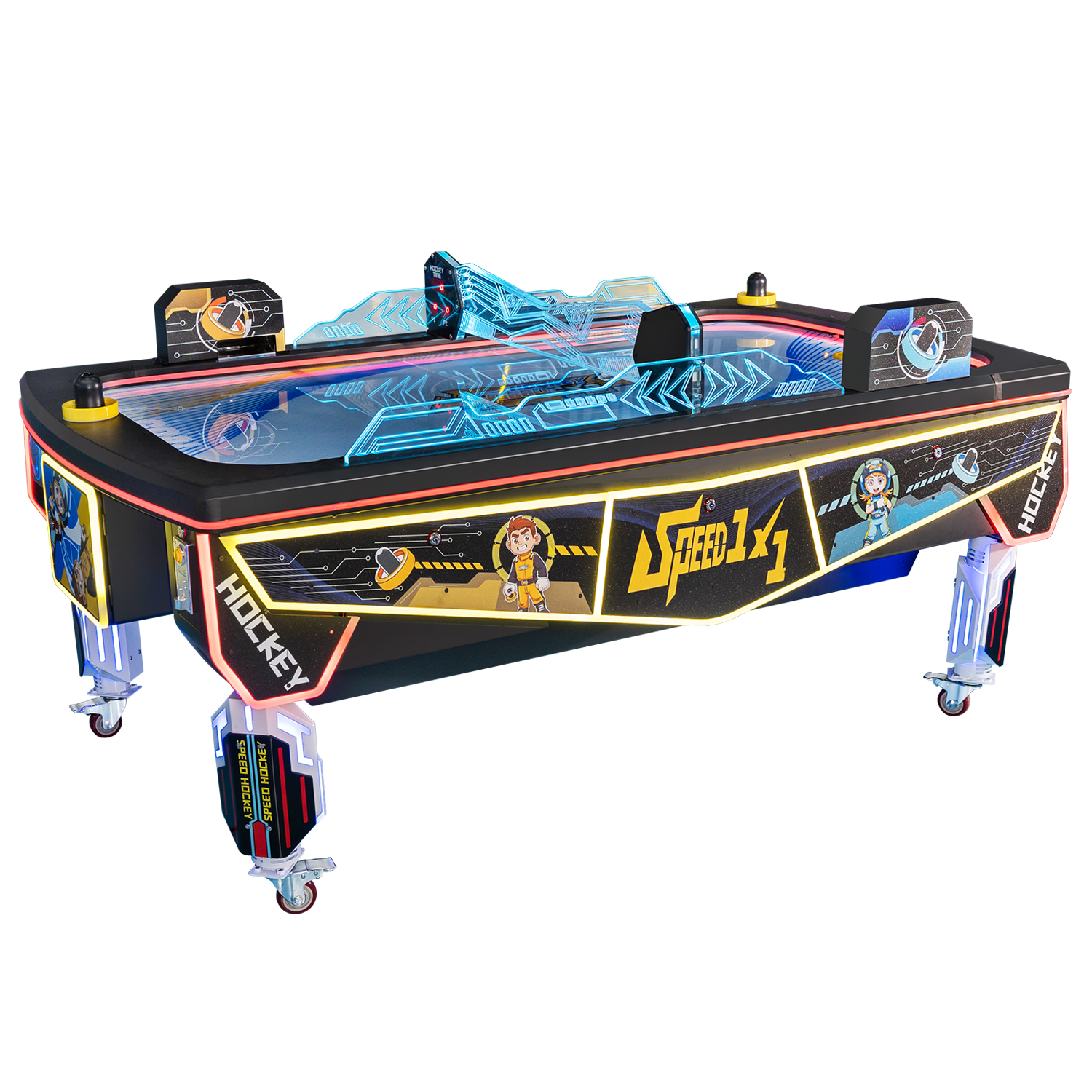
- Air Hockey Table (EP-SP001) — 200–400 W
- Basketball Arcade Machine (EP-SP110) — 300–600 W
- Bowling Machine (EP-SP129) — 300–800 W
- Shooting Game Machine (EP-SH001) — 300–800 W
- Sport Game Machine — 200–800 W
- Racing Game Machine (EP-R001) — 500–1200 W
- VR Simulator (EP-VR001) — 800–1500 W
- VR Game Machine (EP-VR096) — 800–1500 W
A redemption floor assembled from mixed cabinets needs a zone-level load calculation, not an average. A twelve-cabinet mix anchored by racing and VR units sits in a different electrical tier from a twelve-cabinet mix of claw and kiddie ride units.
There is a second mechanic worth separating: ticket-per-play settings and game-mode design are two different levers. EP-L001 lists multiple game modes, and each mode can carry a different ticket schedule. That is where redemption economics are actually tuned — not in the cabinet price.
Parameter 3 — Maintenance Requirements
Maintenance load follows moving parts, and redemption machines simply have more of them. The payer-side and payout-side subsystems are the ones that generate service tickets:
Payment path. Coin acceptor, bill validator, card reader or QR module. EP-SP062 accepts coin, bill, card and QR. EP-L001 accepts coin, card and QR. The Claw Machine (EP-G001) accepts coin, bill, card and QR. The more interfaces a cabinet carries, the more validation surfaces your technician must be able to test.
Payout path. The ticket payout system listed on EP-L001 is a mechanical dispensing subsystem, which places it in a different maintenance category from purely electronic scoring. Claw machines add a claw assembly with adjustable strength plus a transparent prize cabinet that must be restocked and kept presentable.
Game-specific mechanics. The Air Hockey Table (EP-SP001) adds an air blower system for smooth puck movement. The Boxing Arcade Machine (EP-SP010) adds a punching bag and an electronic scoring system with a digital score display. The Shooting Game Machine (EP-SH001) adds an infrared or laser gun system. The Racing Game Machine (EP-R001) adds a steering wheel and pedal control assembly. The Bowling Machine (EP-SP129) adds a bowling mechanism on a synthetic lane surface.
Cabinet, lighting and audio. LED lighting and sound effects appear across the range. Cabinet construction is consistently metal cabinet, tempered glass and ABS plastic on the redemption and arcade models, which keeps enclosure wear low but does not eliminate it.
Summary: direct-play cabinets concentrate their maintenance risk in payment hardware. Redemption and merchandise cabinets add a payout path and, critically, a prize-inventory dependency that continues between service visits.
How Each Machine Type Integrates With Prize Management Systems
Prize management is not a binary. In practice it sits on a three-level spectrum, and each level demands a different procurement decision.
Level 1 — No Prize Layer (Direct Play)
At this level a cabinet collects payment and delivers play. There is no payout obligation and no prize inventory to fund. Machines in this group include the Coin Operated Game Machine (EP-SP062), the Air Hockey Table (EP-SP001), the Racing Game Machine (EP-R001) and the Shooting Game Machine (EP-SH001).
Prize management here means no prize management. The operator tunes play duration, difficulty and mode mix. This level suits high-footfall locations with short dwell times and impulse spending patterns, where the transaction is complete when the play ends.
Level 2 — Merchandise Prize Layer
At this level the prize is a physical object held inside the cabinet. The Claw Machine (EP-G001) is the reference model: 1 player, 120–200 W, adjustable claw strength, prize display system, LED lighting and transparent cabinet design, coin / bill / card / QR payment, CE certified.
Prize management here means stock control plus hold-rate configuration. Because the cabinet accepts card and QR payment alongside coins, a claw unit can be linked into the same venue card system that runs the redemption floor — which matters for operators building a single cashless wallet across an entire venue.
Level 3 — Ticket Redemption Layer
At this level the prize leaves the cabinet as a ticket. The Ticket Redemption Machine (EP-L001) is the reference model: ticket payout system, multiple game modes, 1–2 players, 200–500 W, coin / card / QR payment, CE certified.
Prize management here moves outside the machine entirely. It requires a redemption counter, ticket inventory, a prize tier structure with defined exchange rates, and staffing to run the counter during peak hours. It also touches accounting: unredeemed tickets remain an outstanding liability until they are converted.
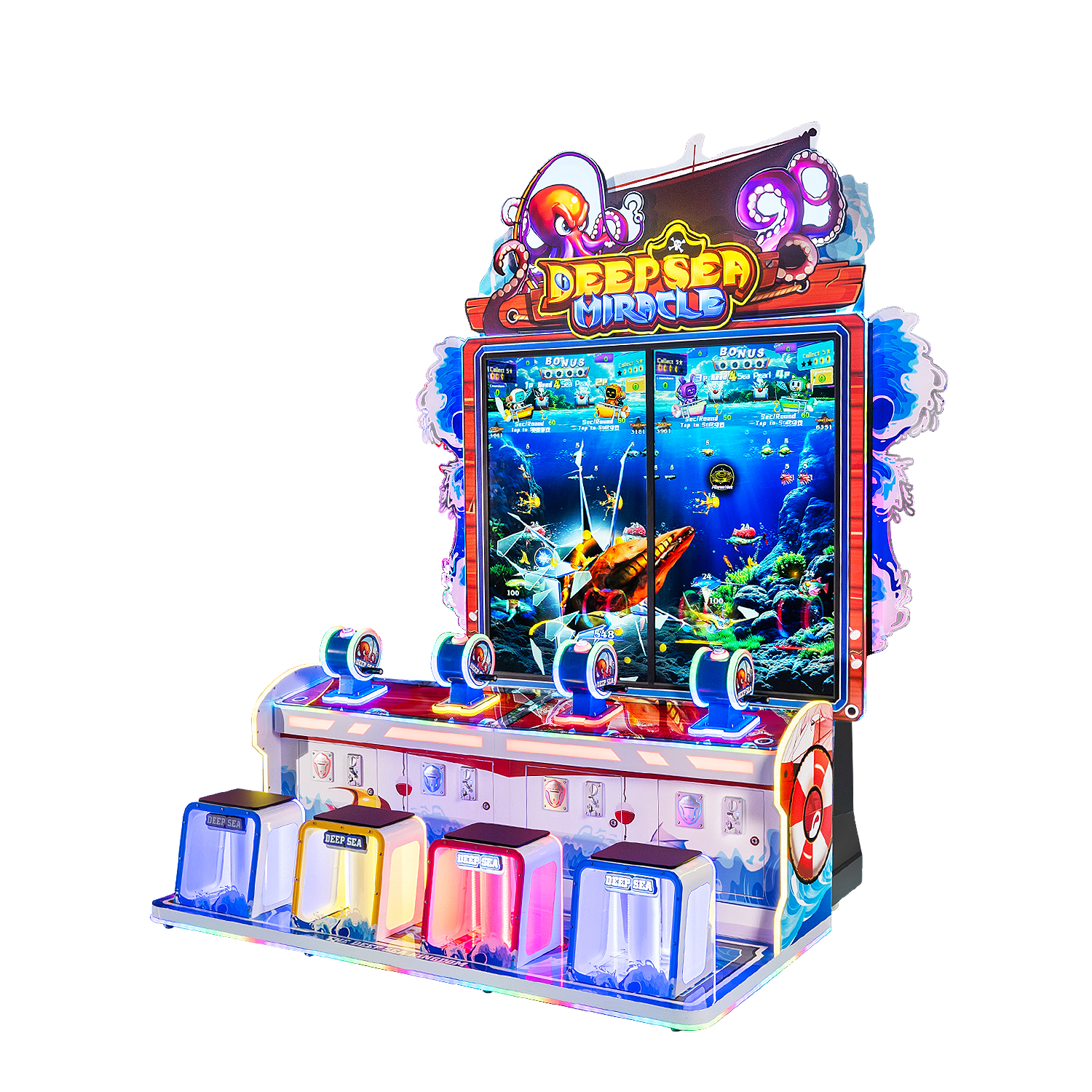
Most commercial venues do not choose one level. They combine all three. EPARK’s family entertainment center application data lists a matched equipment set of air hockey, VR simulators, kids games, redemption machines and soft playground, operating on a card system or cashless payment — that mix intentionally spans direct-play, merchandise and redemption layers in one floor plan.
Step-by-Step: A Technical Checklist Before You Order
The sequence below is designed so that each decision constrains the next. Working in this order prevents the most common failure mode: selecting cabinets first and discovering the payout architecture problem later.
- Fix the payout architecture before the machine list. Decide whether your venue will run direct-play, merchandise prizes, ticket redemption, or a combination. Every later parameter depends on this decision.
- Define the payback target and identify who controls the setting. For redemption cabinets, confirm how the ticket schedule is configured. For merchandise cabinets such as EP-G001, confirm how claw strength is adjusted.
- Match payment interfaces to the existing venue system. EP-SP062 offers coin / bill / card / QR. EP-L001 offers coin / card / QR. EP-G001 offers coin / bill / card / QR. If your venue runs a card system, verify the interface exists on every model on your list.
- Calculate electrical load per zone, not per machine. Use the published power bands — 120–200 W for a claw unit up to 800–1500 W for a VR simulator — and confirm the venue’s distribution capacity before placement.
- Map the prize-management workload. Ticket redemption adds a counter, ticket stock, prize tiers and staffing. Merchandise prizes add cabinet restocking. Direct play adds neither.
- List the wear parts you will need to stock. Payment modules, ticket payout components, claw assemblies, air blower systems and gun systems are the components most exposed to continuous commercial use.
- Verify compliance documentation before shipment. The EPARK range including EP-L001, EP-SP062 and EP-G001 is CE certified. For the European Union, arcade machines must comply with EN 60335-1 (LVD) and 2014/30/EU (EMC) for CE marking, and UL certification is required for the US market. Confirm which documents travel with the shipment.
- Validate on a sample unit. Test the payment path, the payout path and the game-mode configuration on a single cabinet before scaling.
Use Cases: Which Configuration Fits Which Venue
Machine category should be selected against venue conditions, not against a generic ranking. The variables that matter are operating hours, dwell time, audience age, and whether the venue already runs a card system.
- Arcade Game Center. Condition: indoor, high traffic, long continuous operating hours. Function: increase foot traffic, drive repeat play, maximise machine revenue. Operation mode: coin, token or card system with continuous operation. Matched equipment: claw machines, basketball machines, boxing machines, racing games and redemption machines. Special requirement: high durability, easy maintenance, customizable branding and CE certification.
- Family Entertainment Center (FEC). Condition: indoor family-friendly environment with high daily usage. Function: extend customer stay time and increase spending per family. Operation mode: card system, cashless payment preferred. Matched equipment: air hockey, VR simulator, kids games, redemption machines and soft playground. Special requirement: safe design, interactive gameplay and multi-age compatibility.
- Shopping Mall. Condition: high foot traffic, short stay users, impulse consumption. Function: convert walk-in traffic into paying customers. Operation mode: coin or card system. Matched equipment: claw machines, mini games and ticket machines. Special requirement: eye-catching design, compact footprint and high return per square metre.
- Indoor Playground. Condition: indoor, safe environment for children, continuous operation. Function: attract families and increase dwell time. Operation mode: card system or package tickets. Matched equipment: kids game machines, soft playground and redemption machines. Special requirement: safety certification, colourful design and low maintenance.
- Bar / Entertainment Venue. Condition: night operation, adult users, high interaction demand. Function: increase customer engagement and secondary spending. Operation mode: coin operated or token. Matched equipment: boxing machines, basketball machines and air hockey. Special requirement: durable, competitive gameplay with high replay value.
Note the pattern. Venue types that favour cashless operation and family dwell time lean toward the redemption and merchandise layers. Venue types that favour fast impulse transactions can run entirely on direct play. Both the Coin Operated Game Machine (EP-SP062) and the Ticket Redemption Machine (EP-L001) list amusement parks, arcade centers, family entertainment centers and shopping malls as application venues — which is precisely why the venue list alone cannot make the decision for you.
Side-by-Side Comparison: Coin Operated vs Ticket Redemption
The table below compares the two reference models using only published specification data. Where a specification does not list a feature, the table says so rather than assuming.
| Technical Parameter | Coin Operated Game Machine (EP-SP062) | Ticket Redemption Machine (EP-L001) |
|---|---|---|
| Revenue mechanism | Payment converts to play time | Payment converts to play time plus ticket payout |
| Payout hardware | No ticket payout system listed | Ticket payout system listed |
| Players per cabinet | 1–4 players | 1–2 players |
| Power range | 100–1500 W (depending on model) | 200–500 W |
| Voltage | 110 V / 220 V | 110 V / 220 V |
| Payment interfaces | Coin / bill / card / QR | Coin / card / QR |
| Game variety | Multiple game types (claw, racing, shooting, sports, kids) | Multiple game modes available |
| Lighting and audio | LED lighting and sound effects | LED lighting and sound effects |
| Cabinet materials | Metal cabinet, tempered glass, ABS plastic, electronic components | Metal cabinet, tempered glass, ABS plastic, electronic components, LED lighting |
| Certification | CE certified | CE certified |
| Prize-management layer | None required | Redemption counter, ticket inventory and prize tiers required |
The second table shows the power bands of the wider EPARK range, which is the input a buyer needs for zone-level load planning when redemption and direct-play cabinets are mixed on one floor.
| Product | Model | Players | Power |
|---|---|---|---|
| Commercial Kiddie Ride | EP-K001 | 1 child | 80–150 W |
| Dart Machine | EP-SP086 | 1–4 players | 100–300 W |
| Claw Machine | EP-G001 | 1 player | 120–200 W |
| Boxing Arcade Machine | EP-SP010 | 1 player | 150–300 W |
| Kids Arcade Game Machine | EP-A001 | 1–2 players | 150–300 W |
| Air Hockey Table | EP-SP001 | 2–4 players | 200–400 W |
| Basketball Arcade Machine | EP-SP110 | 1–2 players | 300–600 W |
| Bowling Machine | EP-SP129 | 1–2 players | 300–800 W |
| Shooting Game Machine | EP-SH001 | 1–2 players | 300–800 W |
| Racing Game Machine | EP-R001 | 1–2 players | 500–1200 W |
| VR Simulator | EP-VR001 | 1–2 players | 800–1500 W |
| VR Game Machine | EP-VR096 | 1–2 players | 800–1500 W |
Frequently Asked Questions
What certifications should a coin operated or ticket redemption machine carry for export?
The EPARK range, including the Coin Operated Game Machine (EP-SP062), the Ticket Redemption Machine (EP-L001) and the Claw Machine (EP-G001), is CE certified. For CE marking in the European Union, arcade machines must comply with EN 60335-1 (LVD) and 2014/30/EU (EMC). UL certification is required for the US market. Buyers should confirm which documents travel with the shipment and which standards they reference before the purchase order is issued, because compliance documentation is verified at import, not on the showroom floor.
Can one cabinet accept both coin payment and cashless payment?
Yes, on several EPARK models. The Coin Operated Game Machine (EP-SP062) supports coin, bill, card and QR payment. The Ticket Redemption Machine (EP-L001) supports coin, card and QR payment. The Claw Machine (EP-G001) supports coin, bill, card and QR payment. Payment support is not uniform across the whole range, so the interface list must be checked model by model rather than assumed from the category. This matters most for venues that already operate a card or cashless system, where a missing interface changes how the cabinet is integrated into the venue wallet.
Which type draws more power, and how should that affect the machine mix?
It depends on the model rather than the category. The Ticket Redemption Machine (EP-L001) draws 200–500 W, while the Coin Operated Game Machine (EP-SP062) spans 100–1500 W depending on model. Individual cabinet bands show the spread more clearly: the Claw Machine (EP-G001) draws 120–200 W, the Boxing Arcade Machine (EP-SP010) draws 150–300 W, the Air Hockey Table (EP-SP001) draws 200–400 W, the Basketball Arcade Machine (EP-SP110) draws 300–600 W, the Racing Game Machine (EP-R001) draws 500–1200 W and the VR Simulator (EP-VR001) draws 800–1500 W. All run on 110 V / 220 V. The practical implication is that electrical load should be calculated per zone using the actual model list, not per machine using an average.
What are the main maintenance differences between direct-play and redemption cabinets?
Direct-play cabinets concentrate maintenance risk in the payment path — coin acceptors, bill validators, card readers and QR modules. Redemption cabinets add a payout path: the Ticket Redemption Machine (EP-L001) lists a ticket payout system, which is mechanical dispensing hardware. Merchandise cabinets such as the Claw Machine (EP-G001) add a claw assembly with adjustable strength and a transparent prize cabinet that must be restocked. Game-specific mechanics add further exposure, such as the air blower system on the Air Hockey Table (EP-SP001), the punching bag and scoring system on the Boxing Arcade Machine (EP-SP010), the infrared or laser gun system on the Shooting Game Machine (EP-SH001), and the steering wheel and pedal assembly on the Racing Game Machine (EP-R001). Payment and payout components should be treated as the primary stocked spares.
Can buyers test a sample machine before committing to a full-floor order?
Yes. Sample validation is the standard way to confirm the payment path, the payout path and the game-mode configuration before scaling, and it is the only reliable way to verify how a specific cabinet behaves in your own venue conditions. EPARK (Guangzhou EPARK Electronic Technology Co., Ltd.) provides free project solutions tailored to a venue’s space and business objectives, and operates an one-stop service covering manufacturing through global delivery. Buyers evaluating a coin operated or redemption mix can request a sample and quote through EPARK’s official site, by email at sales@nanyuetech.com, or by phone and WhatsApp at +86 13903079263.
Conclusion: Decide the Payout Architecture First
The choice between a coin operated game machine and a ticket redemption machine is not a quality comparison. Both are metal-cabinet, CE-certified, 110 V / 220 V arcade products, and both serve the same venue types. The decision is about payout architecture, and the three parameters that follow from it.
If the venue runs on impulse transactions, short dwell times and no prize counter, a direct-play configuration such as the Coin Operated Game Machine (EP-SP062) keeps the operating model simple: no ticket inventory, no redemption staffing, no outstanding prize liability.
If the venue runs on family dwell time and repeat visits, and already operates a card system or is prepared to build a redemption counter, a ticket redemption configuration such as the Ticket Redemption Machine (EP-L001) fits the model — with the understanding that the ticket payout system adds both a maintenance path and a prize-cost line that must be budgeted per play.
If the prize itself is the attraction, the merchandise layer represented by the Claw Machine (EP-G001) shifts the control lever from ticket schedule to claw strength and stock management.
Whichever route you take, use the checklist in this guide in order: architecture, payback control, payment interfaces, electrical load, prize workload, spare parts, compliance documents, sample validation. Sequences run in that order tend to survive contact with a real venue.
Next Step: Validate the Payout Mechanics on a Sample
EPARK manufactures coin operated game machines, ticket redemption machines, claw machines, air hockey tables and the wider arcade range from a 25,000 m² facility in Panyu, Guangzhou, and exports to the EU, USA, Middle East, Africa, South America and Southeast Asia.
Send your venue type, floor area and target machine mix, and request a sample plan or quotation built around your payout architecture.
Website: www.eparkgames.com
Email: sales@nanyuetech.com
Phone / WhatsApp: +86 13903079263
Have Questions or Need More Details?
Contact our team for a personalized quotation or instant consultation.
Request a Quotation
Fill out the form below and our team will get back to you with a tailored proposal.
WhatsApp Direct Chat
Prefer to chat in real-time? Message us on WhatsApp for instant assistance & quick answers.
- Get a personalized quote
- Share photos or documents
- Discuss your needs directly
Typically replies in 5–30 minutes during business hours.