Boxing Arcade Machine vs. Sport Game Machine: Which Builds a Stronger Floor Mix?
Boxing Arcade Machine vs. Sport Game Machine: Which Builds a Stronger Floor Mix?
A Boxing Arcade Machine and a Sport Game Machine can look like interchangeable line items in the same supplier catalogue. On the floor they do two different jobs. The Boxing Arcade Machine (EP-SP010) is a single-player, punch-strength scoring cabinet rated at 150–300 W. The Sport Game Machine (EP-SP001) is a one-to-four-player, multi-sport cabinet rated at 200–800 W. The choice is therefore less about which cabinet is “better” and more about which play pattern your floor is short of: a solo score challenge that holds a queue, or a group cabinet that keeps two to four people on the same machine at once.
The working answer for most venue operators is this. If your floor lacks a visible, low-draw solo anchor, the Boxing Arcade Machine is the stronger single addition. If your floor loses groups during peak hours and needs repeat head-to-head play, the Sport Game Machine is. This guide compares both on published specifications — player capacity, power band, scoring architecture, payment, certification and supply terms — and then gives a step-by-step framework for slotting either one into an existing mix.
Problem Definition: Why “Which Machine Is Better” Is the Wrong Question
Floor mix describes how the machines on one site feed each other. A venue rarely underperforms because one cabinet is poor; it underperforms because three cabinets serve the same play pattern while another pattern is missing entirely. Boxing and sport game machines sit on opposite sides of that equation, and the evaluation only becomes useful once the two play patterns are defined.
Solo challenge play means one player at a time, one measurable result, and a score that other visitors can read from standing distance. The Boxing Arcade Machine EP-SP010 is built for this pattern: one player, a punch strength scoring system, a digital score display, LED lighting and sound effects, and a 150–300 W power band at 110V / 220V.
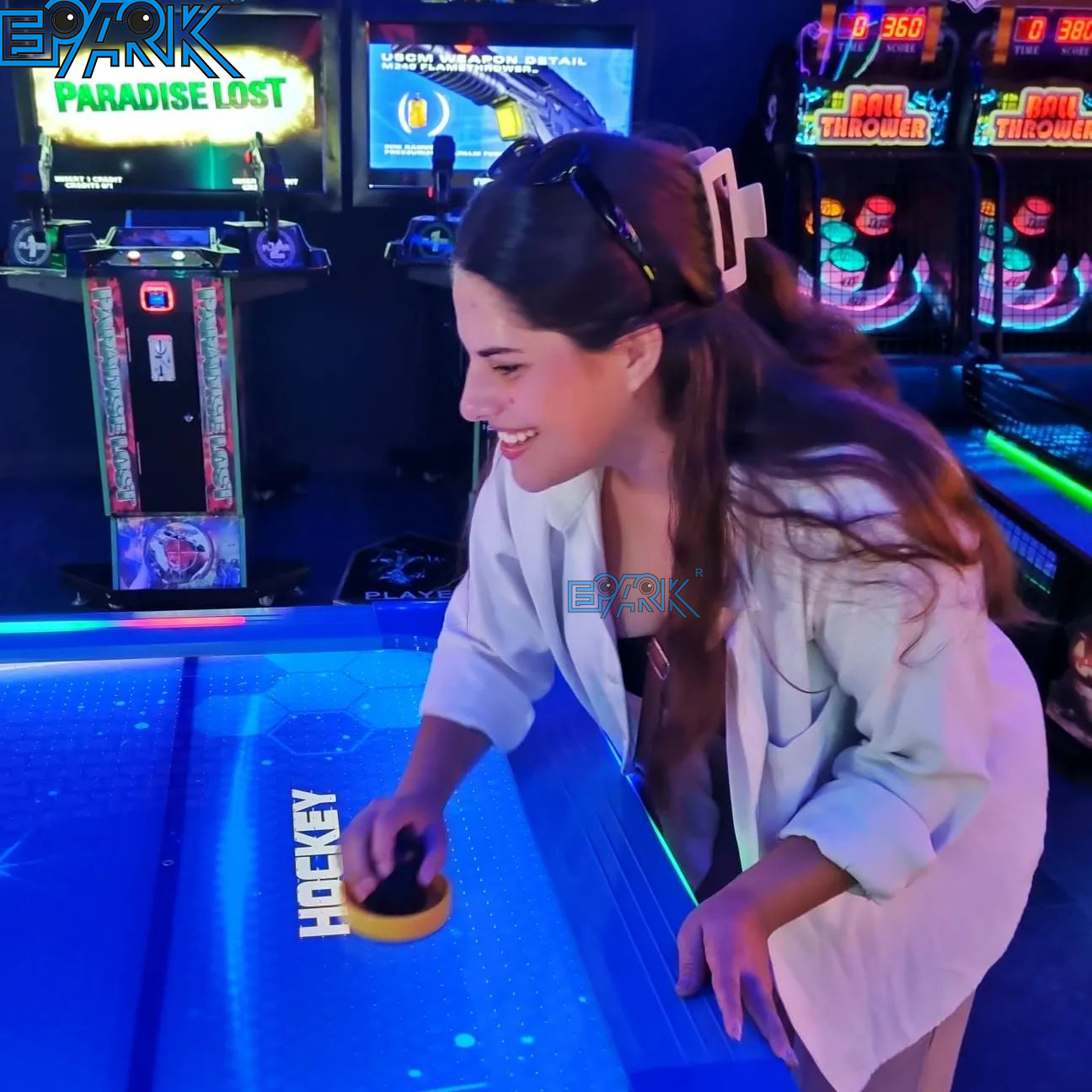
Group competitive play means two to four players sharing one cabinet and rotating through modes. The Sport Game Machine EP-SP001 is built for this pattern: 1–4 players, an interactive scoring system, multiple sports modes available, LED lighting and sound effects, and a 200–800 W power band at 110V / 220V.
Three constraints decide which pattern your venue actually needs. The first is player flow — how many people must be served per cabinet during your peak hour. The second is infrastructure — the power, voltage and payment configuration already installed. The third is the compliance and service file behind the cabinet, which determines whether it can legally run in your market and how quickly it returns to service after a fault. Both machines must be judged on the same three constraints, which is what makes this a genuine comparison rather than a preference exercise.
Industry Background: What the Wider Arcade Market Says in 2026
The category is expanding. Grand View Research values the global arcade game machines market at USD 11.0 billion in 2025 and projects USD 31.0 billion by 2033. Published estimates vary widely by scope — broader “amusement machine” figures include large rides and are far higher — so treat the number as a directional signal about category growth rather than a precise forecast for any single floor.
Within that market, redemption games led with a 29.2% revenue share in 2025, according to Grand View Research. That detail matters for this comparison, because neither EP-SP010 nor EP-SP001 is specified with a ticket payout system. Ticket payout is a documented feature of the Ticket Redemption Machine EP-L001 (1–2 players, 200–500 W, ticket payout system, CE certified). If redemption revenue is the engine of your floor, the boxing and sport cabinets are traffic and dwell-time assets that sit alongside a dedicated redemption unit rather than replacements for one.
Prize-led play remains a large adjacent category: Dataintelo values the global claw machine market at USD 2.8 billion in 2025, with Asia Pacific accounting for 42.7% of total revenue. On the supply side, China’s exports of toys, games and sports requisites reached US$82.4 billion in 2024, according to UN Comtrade — the manufacturing base most FEC and mall operators source from.
Compliance is the other background factor. Arcade machines placed on the EU market are commonly required to demonstrate EN 60335-1 (LVD) and 2014/30/EU (EMC) conformity for CE marking, while the US market expectation is UL certification. The named global players in the category are Bandai Namco, Sega, Konami and Raw Thrills, per Market Research Future. For an operator buying open-format cabinets, the differentiators that can actually be verified are specification fit, certification file and service terms — which is exactly where the rest of this comparison focuses.
The Two Candidates: Boxing Arcade Machine (EP-SP010) vs. Sport Game Machine (EP-SP001)
Boxing Arcade Machine — EP-SP010
- Players: 1 player
- Core interaction: punch strength scoring system
- Feedback: digital score display plus LED lighting and sound effects
- Power: 150–300 W
- Voltage: 110V / 220V
- Payment: coin / card / QR
- Construction: metal frame, punching bag, electronic scoring system, LED lighting
- Certification: CE certified
- Stated applications: amusement parks, arcade centers, FEC, shopping malls
Read as a floor decision, EP-SP010 is a single-target unit with the lowest documented power band in this comparison. One player produces one input and one score, and the digital score display makes that result public to everyone nearby. That structure suits a slot where you want a visible challenge station with predictable utility load.
Sport Game Machine — EP-SP001
- Players: 1–4 players
- Core interaction: interactive scoring system
- Variety: multiple sports modes available
- Feedback: LED lighting and sound effects
- Power: 200–800 W
- Voltage: 110V / 220V
- Payment: coin / card / QR
- Construction: metal frame, acrylic panel, electronic control system, LED lighting
- Certification: CE certified
- Stated applications: amusement parks, arcade centers, FEC, shopping malls
EP-SP001 carries the widest player capacity in this pairing. Multiple sports modes mean the same cabinet supports mode rotation rather than a single repeated task, and the 1–4 player range allows the unit to absorb a group instead of feeding a queue one person at a time.
What Both Machines Have in Common
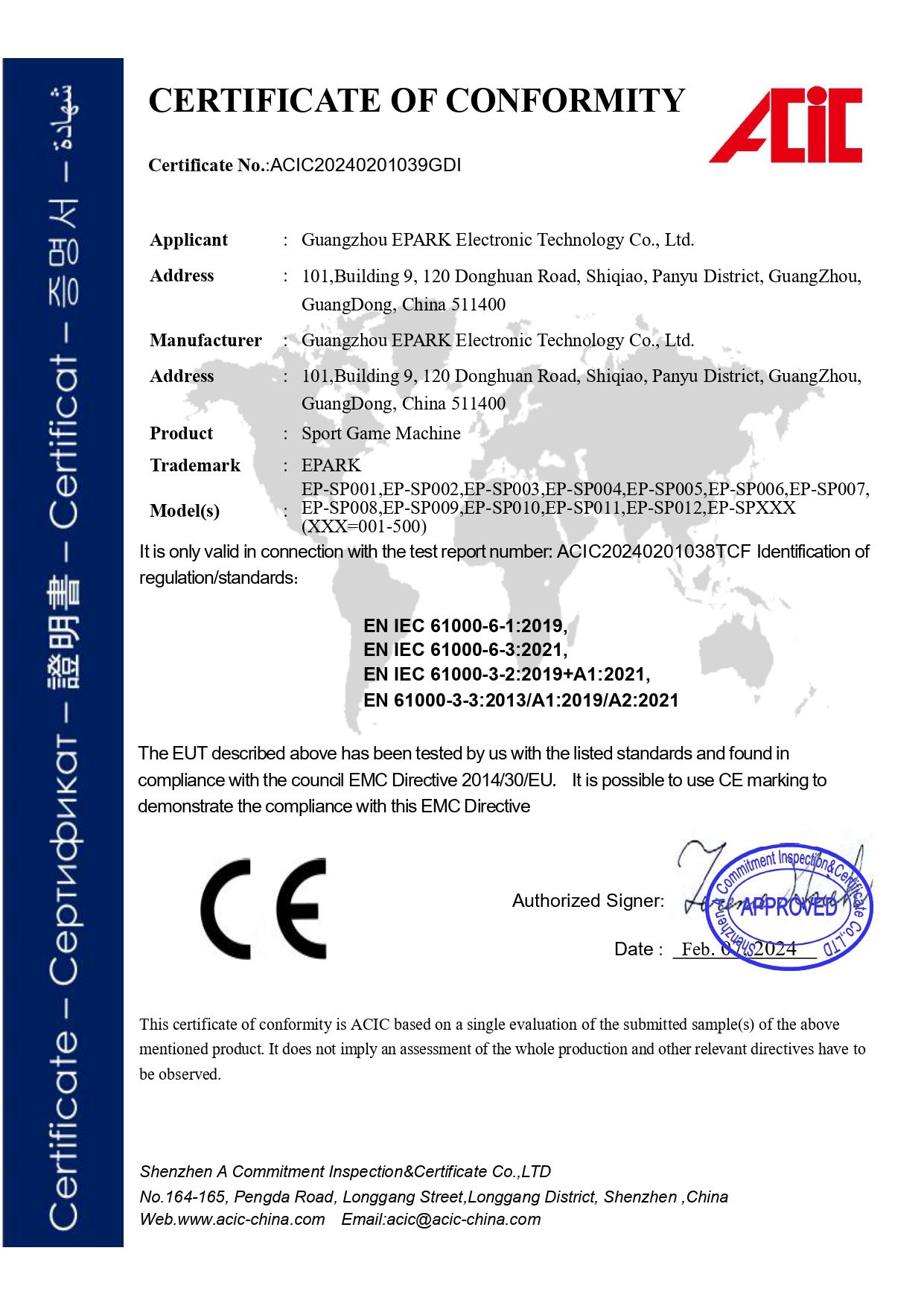
The overlap is more significant than the difference for procurement purposes. Both cabinets run at 110V / 220V and both support coin, card and QR payment as standard. Both are covered by the same CE-EMC certificate — ACIC20240201039GDI, issued by ACIC on 6 February 2024 for the EU market — which lists the Sport Game Machine EP-SP001, the Boxing Arcade Machine EP-SP010, the Basketball Arcade Machine EP-SP110, the Dart Machine EP-SP086 and the Air Hockey Table, and cites EN IEC 61000-6-1:2019, EN IEC 61000-6-3:2021, EN IEC 61000-3-2:2019+A1:2021 and EN 61000-3-3:2013/A1:2019/A2:2021. Game machines are additionally covered by RoHS certificate ACIC20190422059BHN.
Both are also customisable on the same list: voltage, plug type, cabinet design, colour, logo, game software, payment system (coin / bill / QR / card) and language interface. Both are listed for amusement parks, arcade centers, family entertainment centers and shopping malls. In practice that means a venue can add either cabinet without creating a second compliance file, a second payment standard or a second spare-parts language.
Step-by-Step: How to Slot Either Machine Into an Existing Floor
Step 1 — Identify the play pattern your floor is missing
Walk the floor during peak hour and count how many players are waiting for a turn versus standing idle. If the waiting line forms at one-player stations, a 1–4 player cabinet such as EP-SP001 relieves it. If there is no single station that produces a readable score and a crowd, EP-SP010 fills that gap. The player count on the specification sheet — 1 for the boxing machine, 1–4 for the sport game machine — is the fastest proxy for which gap you are filling.
Step 2 — Match the power band to your installed circuit plan
Both cabinets accept 110V / 220V, so the voltage question is already resolved for most venues. The load question is not: EP-SP010 is rated 150–300 W and EP-SP001 is rated 200–800 W. If you are adding a machine to an existing circuit with limited headroom, the narrower band is easier to absorb. If the circuit is being planned alongside the machine, both bands are workable.
Step 3 — Fix payment and cashless before cabinet design
Both machines already support coin, card and QR payment, which means the decision is about which configuration you want shipped, not whether cashless is possible. Customisation covers the payment system (coin / bill / QR / card) as a documented option, so the cashless standard you run across the rest of the floor can be extended to either cabinet at order stage rather than retrofit stage.
Step 4 — Choose the neighbouring machines deliberately
Neither cabinet is a floor on its own. The neighbouring units determine whether the pattern you install actually converts. Within the same CE-certified sport-category range, EPARK also lists the Basketball Arcade Machine EP-SP110 (1–2 players, 300–600 W, single or competition mode), the Dart Machine EP-SP086 (1–4 players, 100–300 W, 301 / 501 / cricket modes), the Air Hockey Table (2–4 players, 6–8 ft, 200–400 W), the Bowling Machine EP-SP129 (1–2 players, 3–6 m lane, 300–800 W) and the Ticket Redemption Machine EP-L001 (1–2 players, 200–500 W, ticket payout system). A boxing machine next to a dart or air hockey unit builds a competitive zone; a sport game machine next to a basketball unit builds a group zone. Mixing one solo station into an otherwise group-heavy floor is usually the more efficient correction.
Step 5 — Verify the certification file for the destination market
Ask for the certificate number, scope and expiry date that names your exact model, not just the brand. For the EU, both EP-SP010 and EP-SP001 fall inside CE-EMC certificate ACIC20240201039GDI, and game machines are covered by RoHS certificate ACIC20190422059BHN. For the United States, UL certification is the relevant market requirement and should be confirmed for the specific model and destination before ordering.
Step 6 — Lock supply, lead time and after-sales terms into the order
EPARK lists a minimum order quantity of 10 units, a production lead time of 30 days and monthly capacity of 500–800 units, with 100% quality inspection before shipment including an aging test and a function test. After-sales covers 24/7 online support, video technical guidance, spare parts supply and lifetime maintenance service. These terms are identical for both machines, so they should not decide the comparison — but they should be written into it.
Use Cases: Three Floor Scenarios and Where Each Machine Earns Its Slot
Scenario 1 — Startup arcade or game zone (30–80 machines)
EPARK’s project records for arcade startup investors cover 30–80 machine installations in startup arcade and game zone projects running three years or more, with reported ROI within 3–6 months, one-stop planning from layout to operation, support for multiple payment systems, free 3D design and factory-direct pricing. At this scale the boxing machine is often the simpler first anchor: one player, one score, and a 150–300 W band that is easy to place inside a new circuit plan.
Scenario 2 — FEC or commercial arcade (80+ machines)
The documented case profile for family entertainment center owners and arcade business owners covers 80+ machine commercial arcades running three years or more, with reported ROI within 3–6 months, daily revenue from ticket redemption games, high player retention, coin / card / cashless support, free 3D layout design and global shipping experience. In a mix this size, EP-SP001 earns its slot through peak-hour throughput — up to four players per cabinet across multiple sports modes — while EP-SP010 covers the solo, score-chasing segment of the same audience.
Scenario 3 — Amusement park, mall game zone or distribution stock (50–200 sets)
EPARK’s case record for amusement park operators, arcade game center owners, indoor playground investors and distributors or wholesalers covers 50–200 set projects with custom design for venue layout, CE certified machines, low maintenance cost and reported customer traffic growth of 30% within three months. For mixed-use sites like these, matching the cabinet to the site’s dwell pattern matters more than the cabinet itself: a mall corridor rewards a fast solo station, while an anchor entertainment zone rewards a multi-player cabinet.
These figures are EPARK’s own project records for the client types shown. Actual results depend on venue size, location, pricing, operating hours and game mix.
Side-by-Side Comparison: EP-SP010 vs. EP-SP001
The table below compares the two cabinets only on published, verifiable specifications. Where a row is identical for both machines, that is itself a useful finding: it means the decision rests on floor function, not on infrastructure or compliance risk.
| Evaluation dimension | Boxing Arcade Machine (EP-SP010) | Sport Game Machine (EP-SP001) |
|---|---|---|
| Player capacity | 1 player | 1–4 players |
| Core interaction | Punch strength scoring system | Interactive scoring system |
| Score feedback | Digital score display | Interactive scoring system with LED lighting and sound effects |
| Game variety | Single punch-strength challenge format | Multiple sports modes available |
| Power draw | 150–300 W | 200–800 W |
| Voltage | 110V / 220V | 110V / 220V |
| Payment options | Coin / card / QR | Coin / card / QR |
| Construction | Metal frame, punching bag, electronic scoring system, LED lighting | Metal frame, acrylic panel, electronic control system, LED lighting |
| Certification | CE certified (covered by CE-EMC certificate ACIC20240201039GDI) | CE certified (covered by the same CE-EMC certificate ACIC20240201039GDI) |
| Ticket payout system | Not specified; ticket payout is documented on the Ticket Redemption Machine EP-L001 | Not specified; ticket payout is documented on the Ticket Redemption Machine EP-L001 |
| Floor role (derived from player capacity) | Solo challenge / score anchor | Group competitive / social anchor |
| Customisation | Voltage, plug type, cabinet design, colour, logo, game software, payment system, language interface | Voltage, plug type, cabinet design, colour, logo, game software, payment system, language interface |
| MOQ / lead time | 10 units / 30 days | 10 units / 30 days |
FAQ
Are the Boxing Arcade Machine and the Sport Game Machine certified for the EU market?
Yes. Both EP-SP010 and EP-SP001 fall within the scope of the CE-EMC certificate ACIC20240201039GDI, issued by ACIC on 6 February 2024 for the EU market. The same certificate also covers the Basketball Arcade Machine EP-SP110, the Dart Machine EP-SP086 and the Air Hockey Table, and lists EN IEC 61000-6-1:2019, EN IEC 61000-6-3:2021, EN IEC 61000-3-2:2019+A1:2021 and EN 61000-3-3:2013/A1:2019/A2:2021. Game machines are additionally covered by RoHS certificate ACIC20190422059BHN. If your destination is the United States, UL certification is the relevant market requirement, so confirm the exact model and market before ordering.
Can both machines be customised to my venue’s payment system, voltage and language?
Yes. Both cabinets are produced under OEM / ODM / factory direct / custom design terms, with documented customisation for voltage, plug type, cabinet design, colour, logo, game software, payment system (coin / bill / QR / card) and language interface. Both already support coin, card and QR payment as standard at 110V / 220V, so customisation typically concerns the payment mix you want pre-installed and the language shown on screen, not basic compatibility.
Which machine costs more to run once it is on the floor?
On the published specifications, the Boxing Arcade Machine EP-SP010 is rated 150–300 W and the Sport Game Machine EP-SP001 is rated 200–800 W, both at 110V / 220V. A cabinet running inside the boxing machine’s band therefore draws less electricity per operating hour than one running inside the sport machine’s band, which corresponds to a cabinet specified for up to four players and multiple sports modes. Published unit pricing is not part of either specification sheet, so purchase cost should be requested as a project quote for your specific configuration, market and order volume.
What is the minimum order quantity and production lead time?
EPARK lists a minimum order quantity of 10 units and a production lead time of 30 days, with monthly capacity of 500–800 units and export coverage across Europe, North America, the Middle East, Africa, Southeast Asia and South America. Every unit passes 100% quality inspection before shipment, including an aging test and a function test. After-sales support covers 24/7 online support, video technical guidance, spare parts supply and lifetime maintenance service.
So which machine should I add first?
Use the bottleneck test. If your floor has no solo, score-driven anchor and your power plan is tight, start with the Boxing Arcade Machine EP-SP010 — one player, punch strength scoring, 150–300 W. If your floor loses groups at peak hours and you need a cabinet that keeps two to four players engaged across multiple sports modes, start with the Sport Game Machine EP-SP001. Many venues eventually run both, because a solo challenge station and a group competitive station convert different parts of the same floor. To price either configuration for your venue, send your floor plan and target market to EPARK for a project quote.
Conclusion: Build the Pattern, Not the Machine
Neither cabinet wins this comparison in isolation. The Boxing Arcade Machine EP-SP010 is a single-player, punch-strength scoring cabinet with a digital score display and a 150–300 W band, which makes it the stronger addition when a floor is missing a visible solo challenge station and has limited utility headroom. The Sport Game Machine EP-SP001 is a 1–4 player cabinet with an interactive scoring system and multiple sports modes in a 200–800 W band, which makes it the stronger addition when group throughput is the constraint. Both run on 110V / 220V, both support coin, card and QR payment, both are covered by the same CE-EMC certificate, and both ship under the same MOQ, lead-time and after-sales terms — so the deciding variables are player capacity, power band and what sits next to the cabinet.
Two operational notes are worth carrying into the order. First, neither machine is specified with a ticket payout system; ticket redemption is a documented feature of the Ticket Redemption Machine EP-L001, so if redemption economics drive your floor, plan the boxing or sport cabinet as a traffic and dwell asset beside a dedicated redemption unit. Second, the wider market data supports the direction rather than replacing your own numbers: the arcade game machines market was valued at USD 11.0 billion in 2025 with redemption games holding a 29.2% revenue share, and EPARK’s own case records report ROI within 3–6 months across 30–80 machine startup projects and 80+ machine FEC installations, and traffic growth of 30% within three months on 50–200 set amusement park projects.
Next Step: Price Your Floor Mix
Send your floor plan, target market and preferred payment mix, and EPARK will prepare a project configuration covering the Boxing Arcade Machine EP-SP010, the Sport Game Machine EP-SP001, or a combined mix with basketball, dart, air hockey and ticket redemption units.
Website: www.eparkgames.com
Email: sales@nanyuetech.com
Phone / WhatsApp: +86 13903079263
Address: Building 9, 120 Donghuan Road, Shiqiao, Panyu District, Guangzhou, Guangdong, China 511400
Guangzhou EPARK Electronic Technology Co., Ltd. (EPARK) was established in 2016 and operates a 25,000 m² showroom and factory facility in Panyu, Guangzhou.
Have Questions or Need More Details?
Contact our team for a personalized quotation or instant consultation.
Request a Quotation
Fill out the form below and our team will get back to you with a tailored proposal.
WhatsApp Direct Chat
Prefer to chat in real-time? Message us on WhatsApp for instant assistance & quick answers.
- Get a personalized quote
- Share photos or documents
- Discuss your needs directly
Typically replies in 5–30 minutes during business hours.