Claw Machine 101: Understanding the Smart-Life Entertainment Category
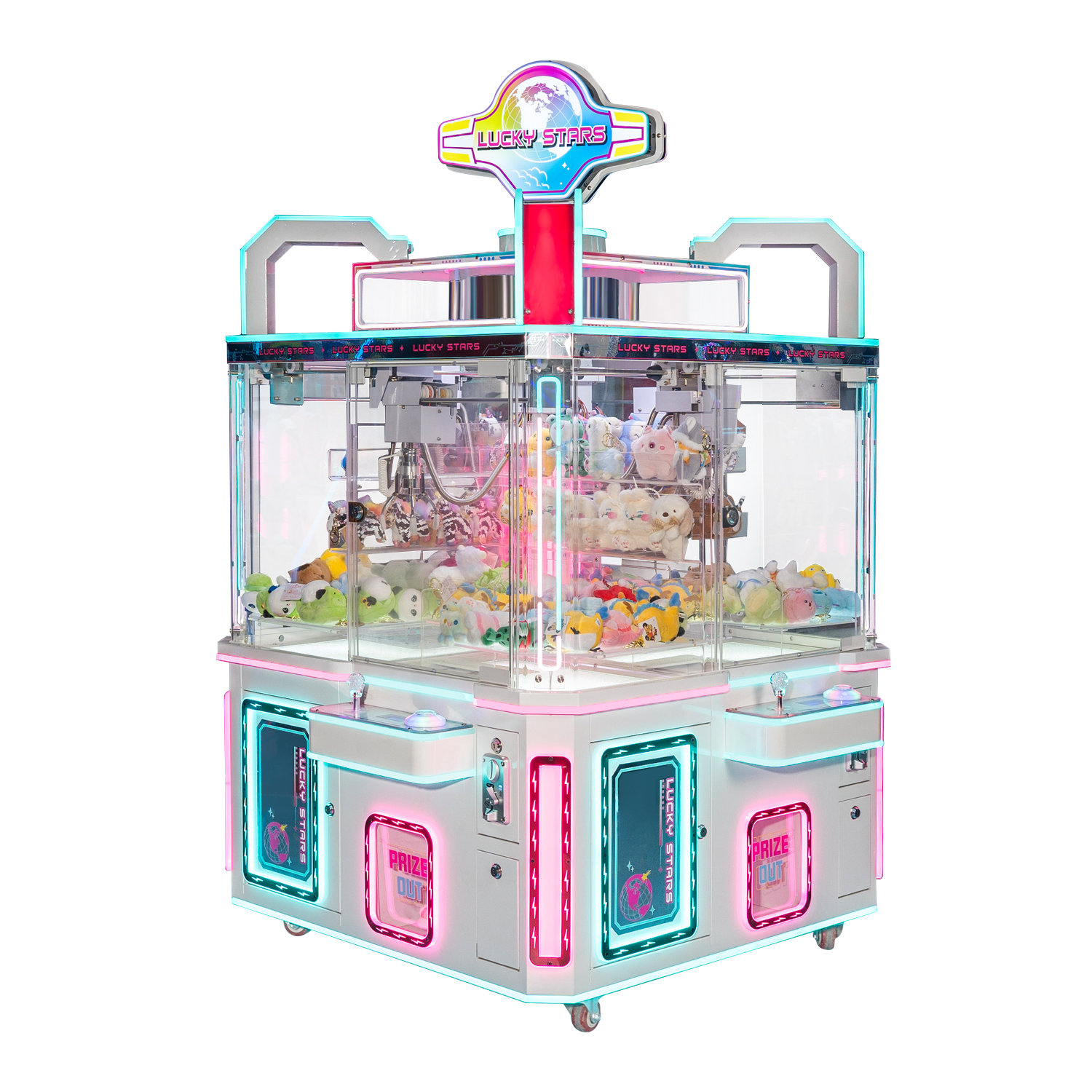
A claw machine is a coin-operated amusement machine in which a player steers a mechanical claw inside a transparent cabinet and tries to lift a prize clear of the pile. Within the smart life and consumer innovation category, it is one of the few products that combines a physical prize display, an electromechanical control system and a payment interface in a single freestanding unit.
That combination is why the category is easy to recognise but harder to read. New buyers see a colourful cabinet with a joystick. Operators see a revenue asset that has to fit a venue, a traffic pattern, a prize budget and a set of local compliance rules. Suppliers see a product that is defined by its specification sheet rather than by its artwork.
This 101 explainer is written for readers who are new to the category: first-time operators, distributors evaluating an additional product line, and procurement staff who have been asked to source a commercial claw machine and need a starting framework. It explains what the category actually contains, where it sits in modern entertainment spaces, how an adjacent amusement product such as a VR game machine compares on published specifications, and why purchasing terms and acceptance criteria should be settled before any deposit is paid.
Everything below is grounded in published product specifications, first-party manufacturer information and verifiable third-party category research. Where a number comes from an external estimate, it is identified as such.
Why the Claw Machine Category Is Hard to Read at First
The first obstacle is vocabulary. The same machine family appears in catalogues as a claw machine, an arcade claw machine, a crane game machine, a grabber machine, a prize claw machine or a vending claw machine. None of these words is wrong, but a buyer searching with one term will miss suppliers listing the product under another.
The second obstacle is range. Under a single label, the category spans a mini claw machine built for a compact footprint, a large claw machine or four-player cabinet built for a busy arcade floor, a plush toy claw machine, a capsule claw machine, a candy claw machine and a gift claw machine. These are not variations of one product; they are different commercial tools aimed at different prize costs and different player groups.
The third obstacle is that beginners compare the wrong layer. Cabinet graphics, LED lighting and prize themes are the visible layer. The decision layer is the specification: rated power, voltage, whether claw strength is adjustable, which payment methods the machine accepts, the materials used for the cabinet and the claw system, and whether the model carries the certification the destination market expects. Two machines that look almost identical in a photograph can differ on every one of those points.
The fourth obstacle is the machine's dual nature. A claw machine is both a game and a prize-distribution channel. The operator is therefore buying equipment and committing to a prize supply, a restocking routine and a payout policy at the same time. That is exactly why purchasing terms and acceptance criteria matter before purchase: the machine has to be judged on gameplay behaviour and on commercial deliverability together.
Where the Claw Machine Sits in Smart Life & Consumer Innovation
Third-party research places the global claw machine market at approximately USD 2.66 billion to USD 2.8 billion in 2024–2025, with projections of more than USD 5.1 billion by 2032–2034 (Dataintelo / Verified Market Research). Alternative estimates from other research houses put the 2024–2025 figure closer to USD 2.0 billion, so the defensible takeaway is the range rather than a single number.
Demand is not evenly distributed. Asia Pacific accounted for a 42.7% revenue share of the claw machine market in 2025, driven by high demand in China, Japan and South Korea (Dataintelo). Within the product mix, middle-type claw machines held the largest single type segment at 44.2% of the global market in 2025 — a useful signal for first-time buyers, because it shows that mainstream commercial volume sits with mid-sized cabinets rather than with the smallest or the largest formats.
Manufacturing is concentrated as well. China's Panyu district in Guangzhou is recognised as a global manufacturing hub for claw machines, hosting a cluster of manufacturers and driving category innovation (Fun-Space Industry Report / Bleegame). Guangzhou EPARK Electronic Technology Co., Ltd. (EPARK) is one of the manufacturers based in that cluster: an entertainment equipment provider with a 25,000 m² showroom and factory space, an annual output of roughly 8,000–10,000 units, around 150 employees and a 20-engineer R&D team. Exports account for about 80% of output, going to the EU, the USA, the Middle East, Africa, South America and Southeast Asia.
At brand level, the category includes established international competitors such as Elaut NV (Belgium), Smart Industries Corp (US), Sega Corporation (Japan) and Bandai Namco. For a new buyer those names matter less as purchase options and more as a reference for how the category segments — premium amusement manufacturers on one side, high-volume arcade equipment suppliers on the other.
One further background fact shapes the buying process. Arcade machines intended for public use fall under safety standards such as IEC 60335-2-82, which specifically covers the safety of amusement machines and personal service machines for public use. Compliance is therefore part of the category definition, not an optional extra.
The Category Map: What Actually Counts as a Claw Machine
Whatever the cabinet looks like, a commercial claw machine is assembled from the same functional blocks: a cabinet, a transparent enclosure, a claw assembly, and an electronic control system that links the joystick, the payment device, the lighting and the movement of the claw. EPARK's standard Claw Machine, model EP-G001, illustrates that structure: a metal cabinet with tempered glass, a claw system and an electronic control system, with adjustable claw strength, LED lighting and a transparent cabinet design, plus a prize display system.
Claw Machine EP-G001 — published specification
- Type: Coin Operated Claw Machine
- Players: 1 player
- Power: 120–200W
- Voltage: 110V / 220V
- Claw: adjustable claw strength
- Cabinet: LED lighting and transparent cabinet design with a prize display system
- Payment: supports coin / bill / card / QR payment
- Certification: CE certified
- Construction: metal cabinet, tempered glass, claw system, electronic control system
- Typical venues: shopping malls, arcade centers, FEC, amusement parks
The format families inside the category
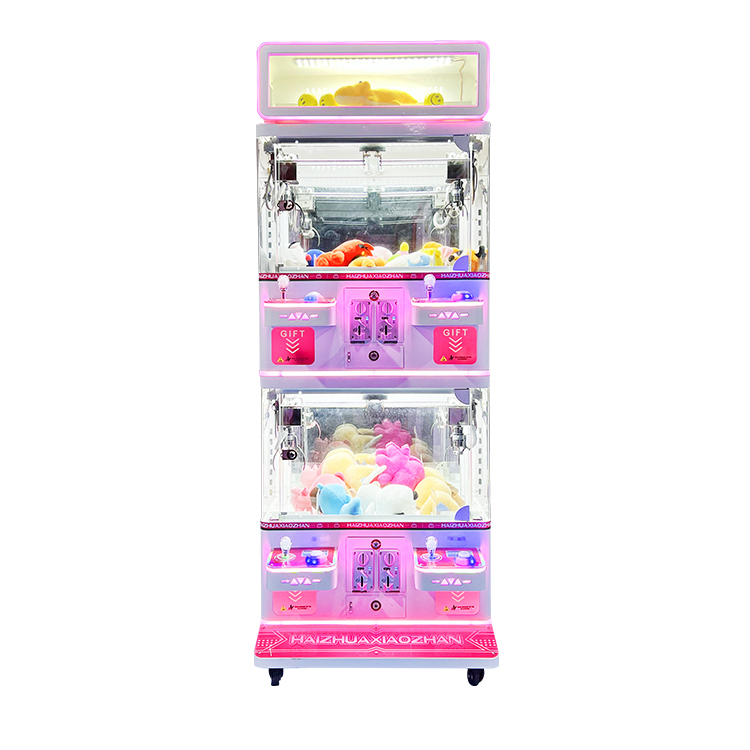
Three variables separate the machine families a buyer will be offered. The first is the player format — a single player claw machine, a double claw machine or a four-player cabinet. The second is physical size, from a mini claw machine for a small footprint to a large claw machine for a high-traffic floor. The third is the prize type the cabinet is designed around: plush toy claw machines, capsule claw machines, candy claw machines and gift claw machines each imply a different prize cost, refill routine and prize-display layout.
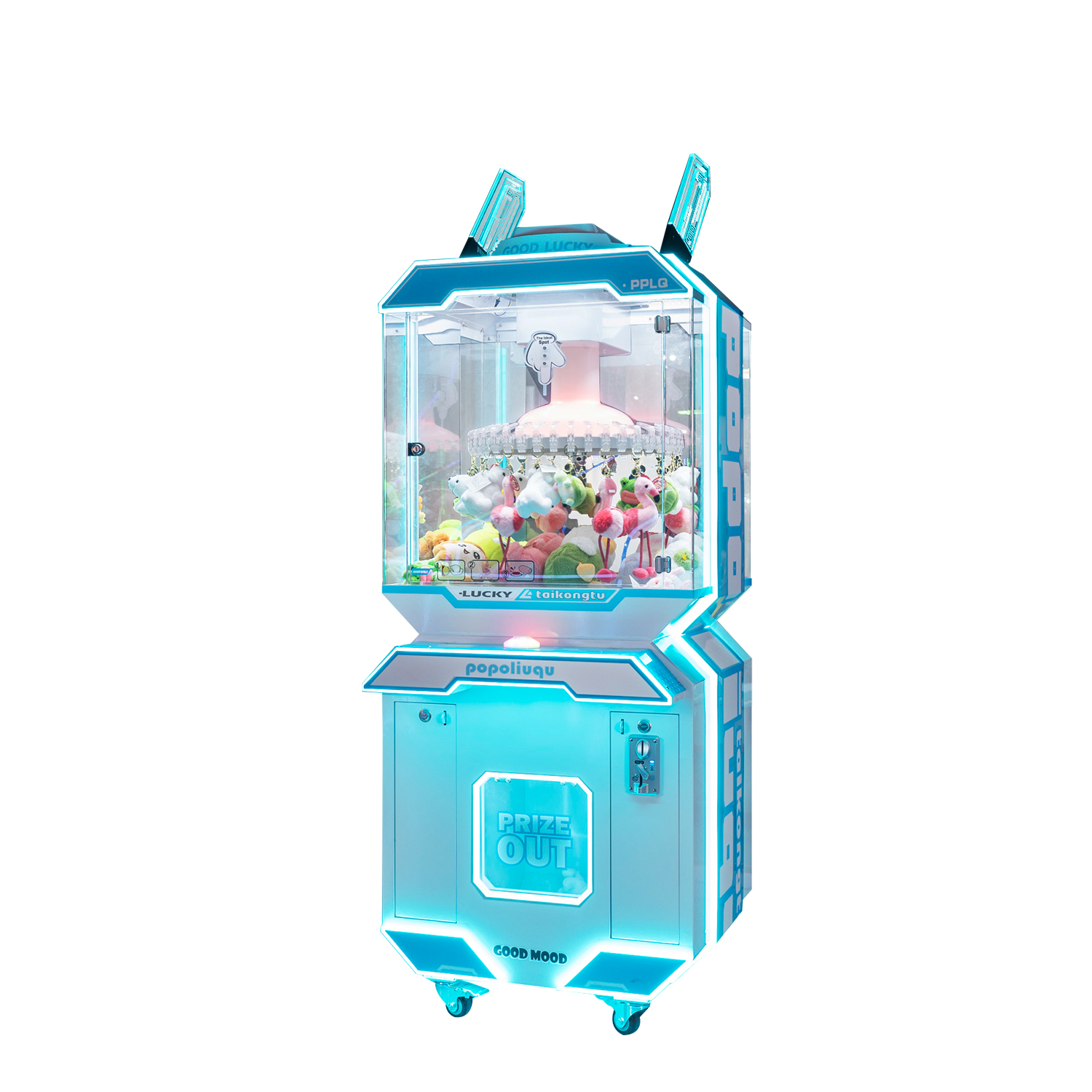
A fourth variable has become a genuine product distinction rather than a marketing label. A smart claw machine adds configurable electronics — adjustable claw strength, digital payment, remote monitoring or software-driven settings — while a traditional claw machine relies on fixed mechanical settings. For a venue that runs several units, that difference changes how quickly staff can adjust difficulty and how easily the machine integrates with a cashless card system.
An adjacent product worth understanding: the VR game machine
Claw machines rarely operate alone in a modern venue. The product family around them includes air hockey tables, basketball machines, racing and shooting games, ticket redemption machines, kids game machines and VR game machines. The VR game machine is the most useful adjacent product for a first-time buyer to understand, because it shows how the same amusement floor can be segmented by dwell time and price point.
EPARK's VR Game Machine, model EP-VR096, is published as a coin-operated VR simulator with 1–2 players, an optional HTC or Pico headset, a 42–55 inch HD display, an optional static, 2DOF or 3DOF motion system, and 20–50 VR games included. It runs on 800–1500W at 110V / 220V, supports coin, card and QR payment, and is CE certified. Its construction uses a metal frame, a fibreglass shell, a VR system, a motion platform and an electronic control system, and its published venues are shopping malls, VR experience centers, FEC and amusement parks.
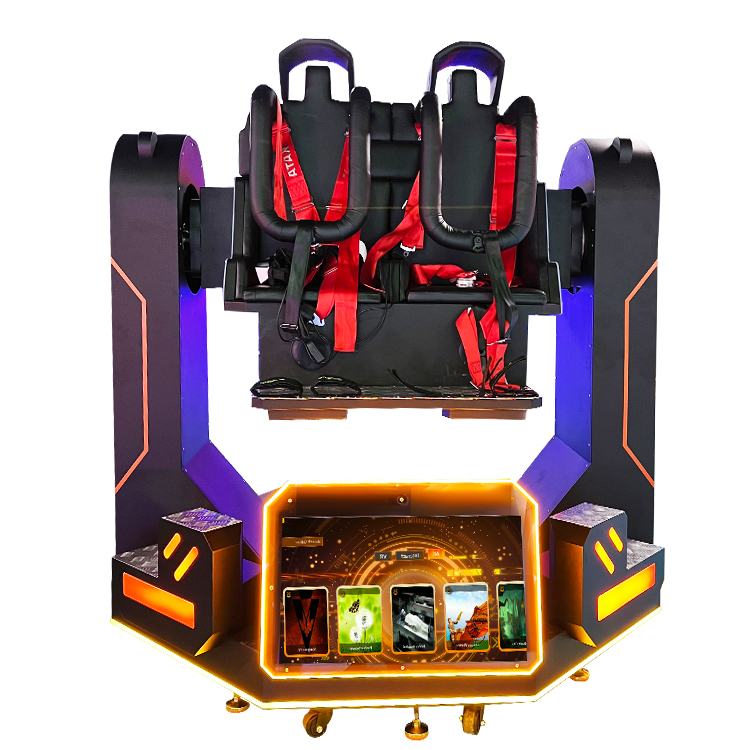
Placed side by side, the two products answer different operator questions. A claw machine produces short, repeatable play cycles and depends on a visible prize; a VR simulator produces longer sessions and depends on content and hardware. A first-time buyer who understands that split can plan a floor mix instead of buying machines one at a time.
Step-by-Step: How to Read the Category Before You Buy
The sequence below is written for a buyer entering the category for the first time. It is deliberately ordered: each step reduces the number of variables in the next one.
Step 1 — Start from the venue, not from the cabinet
A claw machine's value depends on who walks past it. A shopping mall location with high foot traffic and short stay times behaves differently from a family entertainment center with longer dwell times and repeat family visits. Before comparing models, write down the venue type, the average visitor stay, and how the machine will be paid for — coin, token, card or QR.
Step 2 — Fix the player format and the prize type
Player format decides throughput and queue behaviour; prize type decides operating cost. A mini single-player unit suits a compact mall corner, while a double or four-player cabinet suits a center where groups play together. Plush, capsule, candy and gift cabinets carry different prize costs per play, and that cost sits directly inside the payback calculation.
Step 3 — Read the specification sheet, not the artwork
Compare published values rather than impressions. On a claw machine, the specification that matters most is the claw system and whether claw strength is adjustable, because it determines both difficulty and prize-cost control. Then check rated power (120–200W on the EPARK EP-G001), voltage (110V / 220V), payment support (coin / bill / card / QR), the cabinet and enclosure materials, and whether a prize display system is included.
Step 4 — Confirm compliance before you confirm colour
Public-use arcade equipment is covered by safety standards such as IEC 60335-2-82 for amusement machines and personal service machines, and EPARK's claw machine is CE certified. Ask for the certification documents for the exact model and configuration being quoted, and confirm that the voltage band, plug type and payment module match the destination market before production begins.
Step 5 — Write the purchasing terms into the quotation
Purchasing terms belong in the quotation, not in a follow-up email. EPARK publishes an MOQ of 10 units, a standard lead time of 30 days and a monthly production capacity of 500–800 units, and works on OEM, ODM, Factory Direct and Custom Design models. The customisation scope covers voltage, plug type, cabinet design, colour, logo, game software, payment system (coin / bill / QR / card) and language interface — all of which affect both price and schedule.
Step 6 — Define acceptance criteria before production, not after delivery
Acceptance criteria are the written definition of what correct means for the unit being built: claw strength behaviour, payment interface, cabinet finish, prize display layout, lighting and language settings. EPARK's quality control process covers 100% inspection before shipment, an aging test and a function test, which gives the buyer a defined checkpoint to compare against those criteria. After-sales terms complete the picture: 24/7 online support, video technical guidance, spare-parts supply and lifetime maintenance service.
Use Cases: Where a Claw Machine Fits in Modern Entertainment Spaces
Published venue profiles show that the same machine is positioned differently depending on the environment it serves. The table below summarises how four common venue types describe the operating condition, the function and the special requirement they place on equipment.
| Venue type | Operating condition | Primary function | Operation mode | Special requirement |
|---|---|---|---|---|
| Shopping Mall | High foot traffic, short stay users, impulse consumption | Attract mall visitors and convert walk-in traffic into paying customers | Coin / card system | Eye-catching design, compact size, high ROI per square meter |
| Family Entertainment Center (FEC) | Indoor family-friendly environment, high daily usage | Extend customer stay time and increase overall spending per family | Card system / cashless payment preferred | Safe design, interactive gameplay, multi-age compatibility |
| Arcade Game Center | Indoor high-traffic commercial operation with long hours of continuous use | Increase foot traffic, drive repeat play and maximise machine revenue | Coin / token / card system, 24/7 operation | High durability, easy maintenance, customisable branding, CE certified |
| Indoor Playground | Indoor safe environment for children, continuous operation | Attract families and increase dwell time | Card system / package tickets | Safety certified, colourful design, low maintenance |
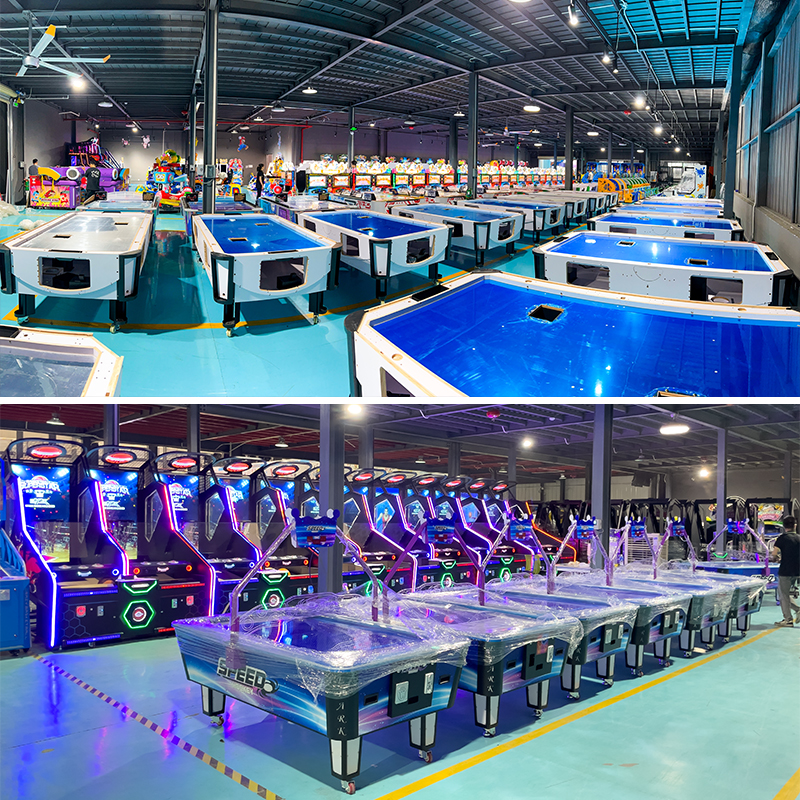
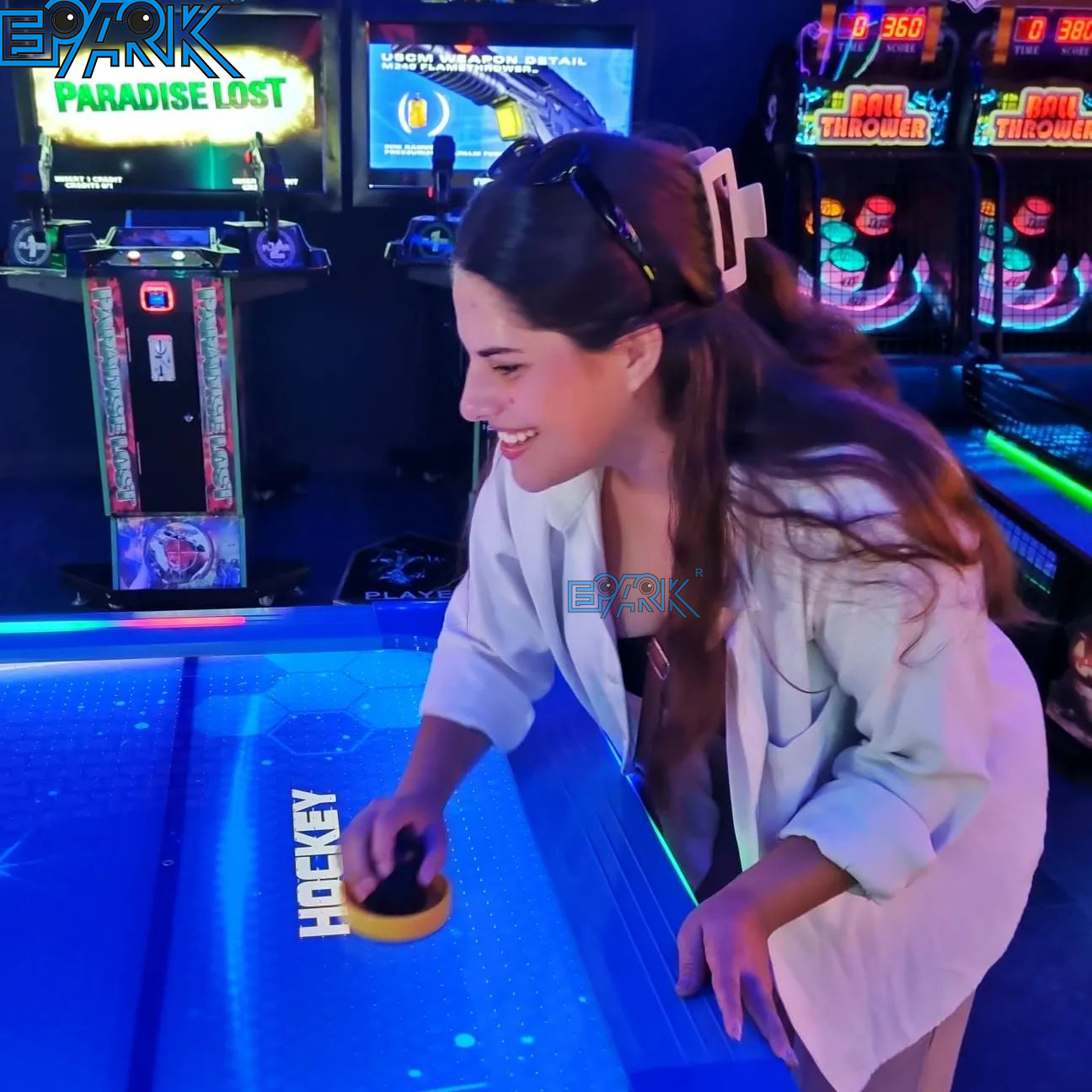
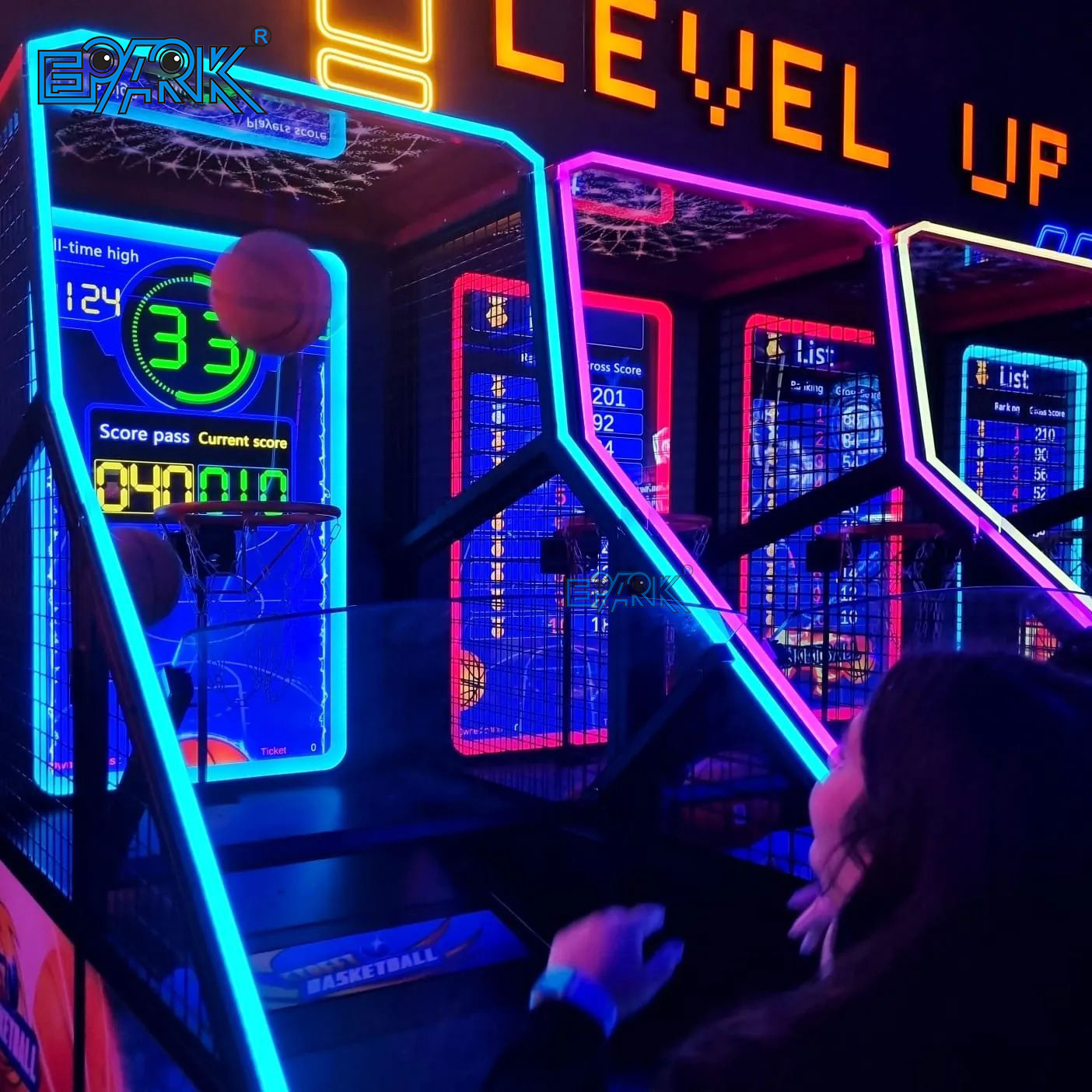
In a mall arcade corner, the claw machine is usually one of several matched units alongside mini games and ticket machines, chosen because it reads instantly to passing traffic. In a game center or FEC, it becomes part of a wider combination that includes air hockey tables, VR simulators, kids game machines, redemption machines and soft playground equipment, where the goal is to extend the visit rather than to capture a single impulse play.
Indoor playground environments change the requirement again. Equipment there is selected for a safe environment with continuous operation, colourful design and low maintenance, and games are typically run on a card system or package tickets rather than loose coins. A buyer choosing a claw machine for a playground is effectively choosing a family-facing device first and a prize machine second.
Claw Machine vs VR Game Machine: A Published-Specification Comparison
Both products belong to the same amusement equipment category, and both are commonly stocked by the same operators. The comparison below uses only published specification data, which is the level at which a first-time buyer should compare any two machines.
| Attribute | Claw Machine EP-G001 | VR Game Machine EP-VR096 |
|---|---|---|
| Product type | Coin operated claw machine | Coin operated VR simulator |
| Players | 1 player | 1–2 players |
| Power | 120–200W | 800–1500W |
| Voltage | 110V / 220V | 110V / 220V |
| Core interactive system | Adjustable claw strength; transparent cabinet with prize display system and LED lighting | Optional HTC / Pico VR headset; 42–55 inch HD display; static, 2DOF or 3DOF motion system; 20–50 VR games included |
| Payment support | Coin / bill / card / QR | Coin / card / QR |
| Certification | CE certified | CE certified |
| Published venues | Shopping malls, arcade centers, FEC, amusement parks | Shopping malls, VR experience centers, FEC, amusement parks |
The power difference is the clearest structural signal. A claw machine draws 120–200W; a VR simulator draws 800–1500W, which affects electrical planning, cooling and operating cost before a single play is sold. The prize dependency is the second signal: the claw machine's appeal is physical and immediate, while the VR machine's appeal is experience-based and depends on content. Neither is automatically the better purchase — they answer different questions about the floor.
Frequently Asked Questions
Do commercial claw machines need certification before installation in a public venue?
Yes. Public-use arcade equipment is covered by safety standards such as IEC 60335-2-82, which addresses the safety of amusement machines and personal service machines for public use, and EPARK's Claw Machine EP-G001 is CE certified. Before shipping, the buyer should confirm that the certification documents match the exact model and configuration ordered, including the voltage band, plug type and payment module, and that they satisfy the destination market's own requirements. Venue licensing rules differ by country, so compliance paperwork is best reviewed at quotation stage rather than at installation.
Can a claw machine be customised for a specific venue, brand or payment market?
Yes. EPARK works on OEM, ODM, Factory Direct and Custom Design models, and the published customisation scope covers voltage, plug type, cabinet design, colour, logo, game software, payment system (coin / bill / QR / card) and language interface. This matters in practice: a venue running a cashless card system does not want a coin-only cabinet, and a distributor selling under its own brand needs cabinet graphics and interface language that match its market. Customisation is agreed before production, which is why the specification sheet rather than the showroom photograph is the document to sign off.
What determines how quickly a claw machine pays back its cost?
Placement and operating efficiency dominate. Third-party research places the average ROI for a well-placed commercial claw machine at typically 12–24 months, depending on location foot traffic and operational efficiency. The main variables are where the machine sits inside the venue, the prize mix and prize cost, the payment method, and whether the unit is part of a wider game mix that keeps players in the space. EPARK's published project records for arcade start-up projects built around 30–80 machines report payback within 3–6 months, a figure that comes from selected first-party projects and should be read as a project outcome rather than a general guarantee.
Can a buyer validate a claw machine before committing to a full production order?
The starting point is the minimum order quantity: EPARK's published MOQ is 10 units. Because claw machine performance depends on mechanical behaviour rather than appearance, buyers are advised to fix acceptance criteria in writing before production — the claw strength range, the payment interface, the cabinet finish, the prize display layout and the language settings — and to check them against pre-shipment evidence. EPARK's quality control covers 100% inspection before shipment, an aging test and a function test, and the after-sales package includes 24/7 online support, video technical guidance and spare-parts supply.
What is the lead time for a claw machine order, and what should a first-time buyer do next?
EPARK quotes a standard lead time of 30 days, against a monthly production capacity of 500–800 units. Lead time is counted from confirmation of the specification, which is why customisation decisions such as voltage, plug type, cabinet design, colour, logo, payment system and language interface should be closed before the order is placed rather than during production. For a first-time buyer, the practical next step is to request the current specification sheet and a quotation for the intended venue format, then compare both line by line against the acceptance criteria above. Inquiries can be sent to sales@nanyuetech.com or placed through the EPARK website.
Conclusion: Read the Category Before You Read the Price List
The claw machine is a mature but easily misread category. It is defined less by what it looks like than by four things: the player format, the prize type, the published technical specification and the compliance documentation. Around those four sit the commercial terms — MOQ, lead time, customisation scope and quality-control checkpoints — that decide whether the machine actually performs in the venue it was bought for.
Seen in that light, the smart life and consumer innovation framing is accurate rather than decorative. A modern claw machine is a small piece of consumer-facing automation: it takes payment, controls a mechanical action, displays a physical reward and has to behave consistently for thousands of cycles. A VR game machine sitting beside it in the same arcade is the same idea expressed through content instead of prizes, with a much higher power draw and a longer session length.
For a first-time buyer, the sequence is straightforward: define the venue and the player, fix the format, verify the specification and certification, agree the purchasing terms and acceptance criteria in writing, then confirm the after-sales route. Everything after that is execution.
Next Step: Get the Specification Sheet Before You Compare Prices
If you are specifying a claw machine for a mall corner, an arcade game center, a family entertainment center or an indoor playground, start with the published parameters: player format, power, voltage, claw adjustability, payment support and certification. EPARK supplies the Claw Machine EP-G001 and the wider amusement equipment range, with OEM / ODM customisation, an MOQ of 10 units and a standard 30-day lead time.
Contact us for the current specification sheet, a venue-fit quotation or a product catalogue: sales@nanyuetech.com | WhatsApp +86 13903079263 | www.eparkgames.com
Have Questions or Need More Details?
Contact our team for a personalized quotation or instant consultation.
Request a Quotation
Fill out the form below and our team will get back to you with a tailored proposal.
WhatsApp Direct Chat
Prefer to chat in real-time? Message us on WhatsApp for instant assistance & quick answers.
- Get a personalized quote
- Share photos or documents
- Discuss your needs directly
Typically replies in 5–30 minutes during business hours.