Arcade Machine Compliance Guide: Building a Region-Ready Documentation File
Arcade Machine Compliance Guide: Building a Region-Ready Documentation File
An Arcade Machine order is usually approved long before anyone asks for the paperwork. That order of events is the problem. By the time a container is booked, the compliance file — certificates, test reports, declarations of conformity, rating labels, and model lists — has to be assembled from documents that were never requested at the right moment, in the right version, for the right market.
This guide is written for Decision-stage buyers: importers, FEC operators, distributors, and project contractors who have already shortlisted equipment and now need the shipment to clear customs, satisfy a landlord or insurer, and pass a venue inspection. It explains what a region-ready documentation file contains, what to request from suppliers for categories such as boxing arcade machines, air hockey tables, VR simulators, and ticket redemption machines, and how to match each document to destination market requirements.
Quick answer: A region-ready documentation file for an Arcade Machine order is built from four layers — product identity documents, electrical safety and EMC documents, materials and packaging documents, and trade documents — plus category-level certificates where the equipment type requires them. The file is only region-ready when the model references on the certificates match the model references on the invoice and packing list, and when the certificate type matches the destination market's rule (CE for the EU, UL for the US).
What "Region-Ready" Actually Means in an Arcade Machine Order
A region-ready documentation file is a single, order-specific package that identifies the exact machines in a shipment and demonstrates that they meet the electrical, electromagnetic, and material requirements of the destination market. It is not a brand brochure, and it is not a folder of certificates issued for other products.
In practice, "region-ready" depends on four matches, and a file fails if any one of them breaks:
- Identity match. Every certificate, test report, and declaration lists the model designations used on the invoice and the packing list — not a generic product description.
- Market match. The certificate type is the one the destination authority recognises for that equipment category.
- Version match. The document revision is current and its issue date precedes the shipment.
- Physical match. The nameplate on each machine shows the same voltage, power rating, and model code that appear in the paperwork.
The most common failure sequence is predictable. A buyer requests a quotation, pays a deposit, production starts, and only then does someone email "please send your certificates." Weeks later the mismatch is discovered: a certificate that covers a different cabinet size, a declaration without standard numbers, or a rating label that does not match the test report. The shipment waits while the file is rebuilt.
Industry Background: Why Documentation Now Decides More Arcade Machine Orders
The volume of cross-border amusement equipment is large enough that documentation has become a structural part of procurement rather than a formality. Grand View Research valued the global arcade game machines market at USD 11.0 billion in 2025 and projects it to reach USD 31.0 billion by 2033, a trajectory driven largely by venue development across multiple regions.
Category mix shapes documentation demand as well. The same source reports that redemption games led the arcade market with a 29.2% revenue share in 2025, and Dataintelo valued the global claw machine market at USD 2.8 billion in 2025, with Asia Pacific accounting for 42.7% of total revenue. Both categories involve prize interaction, ticketing mechanisms, and materials that buyers frequently have to explain to venue regulators or shopping-mall management.
On the supply side, UN Comtrade data shows China's exports of toys, games, and sports requisites reached US$82.4 billion in 2024. A significant share of that flow consists of coin operated game machines moving from Chinese manufacturers into markets with their own electrical, labelling, and import requirements. Major players in the arcade machine space include Bandai Namco, Sega, Konami, and Raw Thrills, alongside a broad manufacturing base of export-oriented producers — which means buyers routinely compare suppliers across different compliance footprints, not just different prices.
The Document Set: What to Request From an Arcade Machine Supplier
A complete file is easier to assemble when the request is split into five document groups. Each group answers a different question a customs officer, venue operator, or insurer will ask.
1. Product identity documents
- An SKU-level model list covering every machine in the order.
- Nameplate or rating-label records showing voltage, frequency, power rating, and model code.
- A product description sheet with dimensions, weight, and materials for each cabinet type.
- A component list for major electrical parts, so the tested configuration can be identified.
- The user manual version that ships with the units.
2. Electrical safety and EMC documents
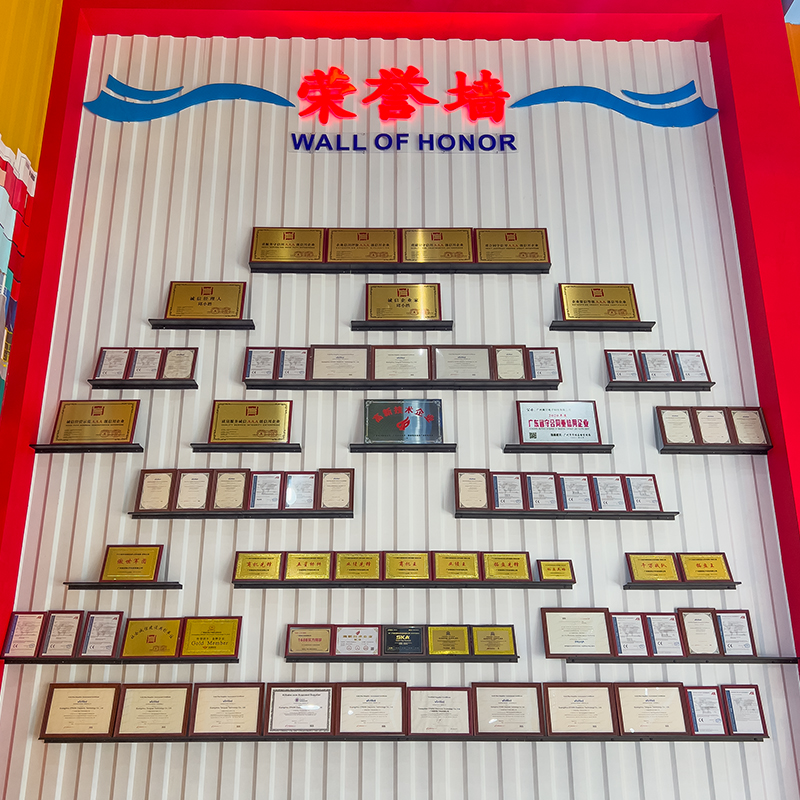
Published compliance guidance for arcade and amusement equipment indicates that CE marking in the EU relies on EN 62841 or EN 60335-1 under the Low Voltage Directive together with 2014/30/EU for electromagnetic compatibility, while UL certification is the requirement buyers encounter for the US market. Request the certificate, the underlying test report, and a Declaration of Conformity that names the manufacturer and lists the standards applied and the issue date. Add a RoHS declaration, and check that its product scope names the machine families in the order rather than the brand as a whole. As a supplier-side example, EPARK holds CE (EMC and LVD) and RoHS documentation covering its arcade machine range.
3. Materials, packaging, and labelling documents
- Material declarations for surface finishes and contact parts, particularly on kiddie rides and indoor playground equipment.
- Packaging specification and wood-packaging treatment records where the destination requires them.
- Rating label artwork and the language version used on the machine.
- Safety warning labels for moving parts, impact cabinets, and load-bearing platforms.
4. Commercial and logistics documents
Proforma invoice, commercial invoice, packing list, bill of lading or air waybill, and certificate of origin form the commercial spine of the file. Attach the warranty terms document and the spare parts list, because both are usually requested later by the buyer's finance or maintenance team and are easier to obtain before shipment than after.
5. Category-specific documentation
Different cabinet types stress different parts of the file. Buyers sourcing boxing arcade machines typically need anchoring and load information for impact cabinets, plus confirmation that the tested model matches the shipped cabinet. Air hockey tables require documentation for the blower motor rating and playing-surface material. VR simulators add software and content documentation alongside the electrical file, and buyers generally need the configuration frozen before testing so the certificate matches what is delivered. Ticket redemption machines combine mechanism documentation with the destination market's rules on prize and ticketing operations. Claw machines, doll machines, kiddie rides, and kids game machines are frequently grouped into one family, but each model code should still appear on the applicable certificate.
Step-by-Step Breakdown: Building the File in Seven Steps
- Freeze the machine list before you freeze the quote. Documentation is generated per model, so any change to the model mix after certification begins creates a rework cycle. Finalise the categories — claw machine, air hockey table, boxing machine, basketball machine, racing simulator, shooting simulator, ticket redemption machine, kiddie ride, indoor playground — and the exact model codes first.
- Map each model to a certification family. Group the order by the way it will be tested: similar small cabinets may sit in one family, while a VR simulator or a motion-based racing simulator should be handled separately because its configuration differs.
- Request the certificate package with model-level references. Ask for the certificate, the test report behind it, and the Declaration of Conformity in one request, and specify that the model codes must match the invoice.
- Verify the manufacturer identity on every document. The entity named on the certificate, the entity on the invoice, and the entity shipping the goods should be traceable to each other. If a trading partner issues the invoice, ask for the supporting relationship document.
- Align the electrical configuration with the destination before testing. Voltage, frequency, plug type, and coin or card acceptance configuration should be locked before the test is performed, because the tested configuration is what the paperwork describes.
- Prepare labels and language versions for the destination market. Rating labels, warning labels, and user manuals should be confirmed before packing, not added at the port.
- Run a final document audit before the balance payment and before booking. Compare certificates, invoice, packing list, and nameplate data as a single set, and resolve discrepancies while the goods are still in the factory.
Matching the File to Destination Market Requirements
European Union
The EU file is built around CE marking. Per published arcade equipment compliance guidance, the route runs through EN 62841 or EN 60335-1 (Low Voltage Directive) and 2014/30/EU (EMC), supported by a Declaration of Conformity and a RoHS declaration. Buyers should also keep the label language and manual language consistent with the markets where the venue operates.
United States
For the US market, the documentation reference point is UL certification rather than CE. The practical test is the same: the certificate must be traceable to the model being shipped, and the electrical rating on the machine must match the tested configuration.
Middle East, Africa, South America, and Southeast Asia
Import requirements vary across these regions and are frequently administered at national rather than regional level. Manufacturers that already export into these markets, such as EPARK, whose export coverage includes the EU, USA, Middle East, Africa, South America, and Southeast Asia, can usually supply the core file — identity, electrical, materials, and commercial documents — while the buyer's customs broker or local authority confirms any additional national requirement. Ask for the same core document set regardless of region; it is the additional requirement, not the base file, that changes.
Common Red Flags in Arcade Machine Documentation
- A certificate that covers the brand, not the model. If the certificate lists a category name where the model code should be, the file will not survive a customs query.
- One certificate reused across unrelated categories. A single CE file covering both a boxing machine and a VR simulator usually means the tested configuration was never defined.
- Manufacturer name on the certificate differs from the invoice seller. Ask for the relationship document or request re-issuance.
- A Declaration of Conformity without standard numbers or an issue date. An undated declaration cannot prove that the current build was assessed.
- Test reports with no identified laboratory. A report without an issuing body is difficult to defend in a dispute.
- Rating data that contradicts the nameplate. Voltage or power differences between the document and the machine are one of the fastest ways to trigger an inspection hold.
- Labels in a single language when the destination requires another. Local label wording is a common late-stage blocker.
- Documents promised only after full payment. A supplier confident in its compliance footprint will share the certificate package at quotation stage.
Use Cases: Four Documentation Situations Buyers Actually Face
Case 1 — EU indoor playground opening
The order mixes kiddie rides, kids game machines, soft playground equipment, and a ticket redemption machine. The file is built as one master document with a CE section per product family, and the playground equipment is separated from the electronic game cabinets because the assessed material and contact requirements differ.
Case 2 — US FEC floor refresh
A venue operator replaces part of the floor with boxing machines, a basketball machine, and air hockey tables. Because the US reference point is UL certification, the buyer requests the UL file per model and cross-checks the electrical rating against the venue's supply before confirming the order.
Case 3 — VR simulator deployment
A new entertainment zone adds a VR simulator. The documentation request expands beyond the cabinet to include software and content references alongside the electrical file, which is why the configuration has to be frozen before testing begins.
Case 4 — Distributor serving several regions
A distributor buying claw machines, doll machines, dart machines, and shooting simulators for multiple markets builds one master file plus region packs, so a certificate already reviewed for one market is not accidentally presented in another.
Comparison Table: Document Types, What They Prove, and Where They Break
| Document | What it proves | Market relevance | Common failure point |
|---|---|---|---|
| SKU-level model list | Which exact machines are in the order | All markets | Generic wording such as "arcade game machine" instead of model codes |
| Rating label / nameplate record | Electrical rating, voltage, and power | All markets | Label data differs from the test report |
| LVD test report (EN 62841 or EN 60335-1) | Electrical safety of the cabinet | EU (CE) | Report covers a different model family |
| EMC test report (2014/30/EU) | Electromagnetic compatibility | EU (CE) | No identified issuing laboratory |
| Declaration of Conformity | Manufacturer's formal claim against listed standards | EU (CE) | Missing standards or issue date |
| UL certification file | Safety compliance for the US market | US | Certificate not traceable to the shipped model |
| RoHS declaration | Restricted material compliance | EU and other markets | Blanket statement with no product scope |
| Certificate of origin | Origin of goods for duty treatment | Most import markets | Issued after the shipment has departed |
| Packing list and loading record | Physical match between documents and container | All markets | Quantities or model mix differ from the invoice |
| Warranty and spare parts list | After-sales coverage and serviceability | All markets | Undefined coverage or no parts reference |
Build Records Belong in the Same File: How EPARK Compares
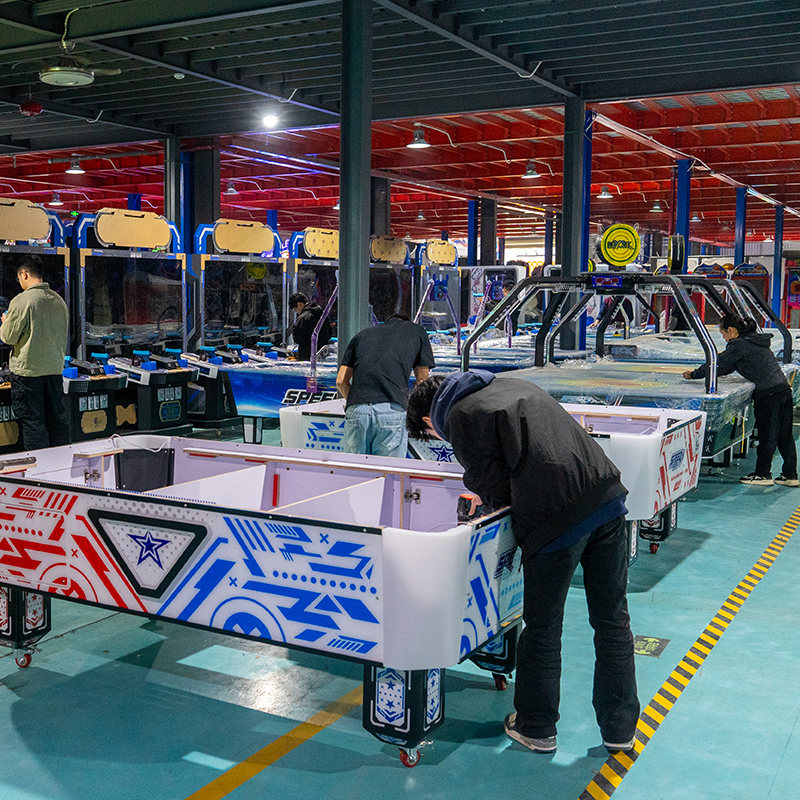
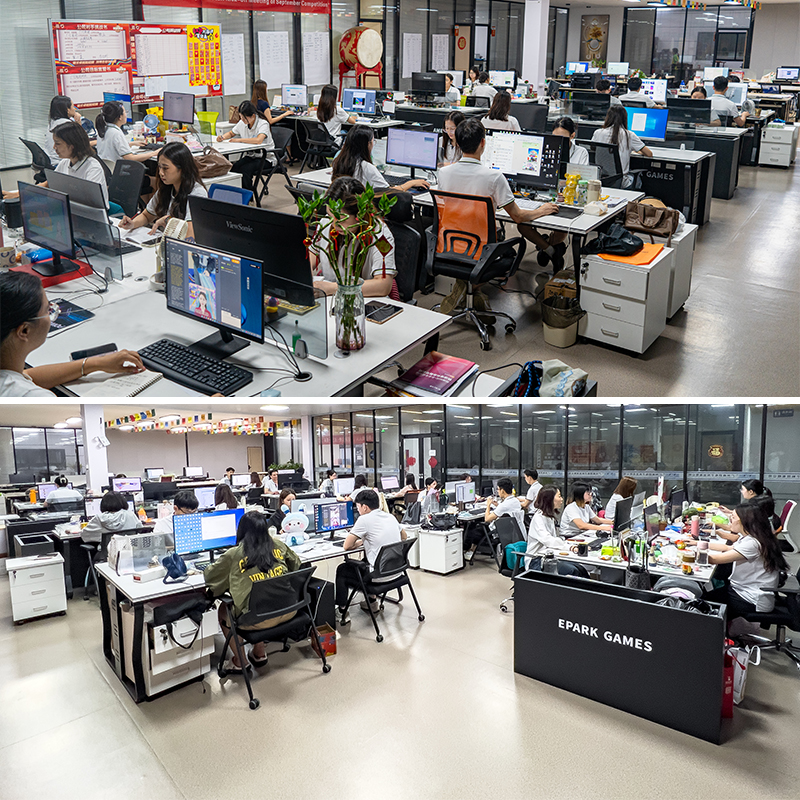
Guangzhou EPARK Electronic Technology Co., Ltd. (EPARK) is an entertainment equipment solutions provider based in Panyu, Guangzhou, operating a 25,000 m² showroom and factory, and supplying claw machines, air hockey tables, basketball machines, boxing machines, VR simulators, racing arcade machines, shooting game machines, ticket redemption machines, kids game machines, and indoor playground equipment.
Documentation is only credible when it reflects how the machine was actually built, which is why EPARK's production controls are relevant to the file. Incoming material inspection and production testing are applied during the build, production schedules are controlled with buffer stock, and a multi-step inspection is completed before shipment. On the service side, buyers receive support from a dedicated after-sales team with spare parts backing, which is the same reference material a compliance file should include for warranty and serviceability.
| Comparison dimension | EPARK arcade machines relative to standard arcade game machines (per EPARK product comparison data) |
|---|---|
| Cabinet structure | Stronger cabinet structure with stable performance and customizable design |
| Service life | Stated as 30% longer lifespan |
| Player attraction | Stated as 20% higher player attraction |
| Venue fit | Shopping malls, FEC, amusement parks, and game centers |
| Maintenance | Easy maintenance with remote technical support |
| Cost profile | Lower long-term maintenance cost |
| Operation | Low power consumption and stable operation |
For a buyer at Decision stage, the practical meaning is this: build quality, service support, and documentation quality point at the same supplier capability. A file that describes the tested configuration, the inspection routine, and the spare parts route is more useful than a folder of certificates with no operational context.
FAQ: Arcade Machine Compliance and Documentation
Which certification documents should an Arcade Machine importer request for the EU and the US?
For the European Union, published arcade equipment compliance guidance points to EN 62841 or EN 60335-1 under the Low Voltage Directive together with 2014/30/EU for electromagnetic compatibility as the basis for CE marking, while UL certification applies to the US market. Request the certificate, the underlying test report, a Declaration of Conformity naming the manufacturer and listing standards and issue date, and a RoHS declaration. As an example of a supplier-side package, EPARK holds CE (EMC and LVD) and RoHS documentation covering its arcade machine range.
Can one supplier document a mixed order covering boxing machines, air hockey tables, VR simulators, and ticket redemption machines?
Yes — and a mixed order should produce one master file with category sections rather than four unrelated document sets. EPARK's product range includes claw machines, air hockey tables, basketball machines, boxing machines, VR simulators, racing arcade machines, shooting game machines, ticket redemption machines, kids game machines, and indoor playground equipment, which lets a buyer consolidate documentation under one supplier and one shipping file. Each model reference still has to appear on the certificate that applies to it, so the consolidation is organisational, not automatic.
Does building a region-ready documentation file change the cost of an Arcade Machine order?
Documentation is rarely a separate line item; cost pressure appears indirectly through testing scope, custom configuration, packaging, and spare parts planning. EPARK provides free project solutions tailored to a venue's space and business objectives and manages manufacturing through to global delivery as a single service system, and its comparison data describes a lower long-term maintenance cost supported by easy maintenance and remote technical support. For budgeting purposes, treat document preparation time — not document fees — as the main risk, and start the file at quotation stage.
Can a buyer review documents and samples before paying the balance on an Arcade Machine order?
Yes, and the review should be scheduled before the balance payment. Request the certificate package for the exact models in the order, compare model references against the invoice and packing list, and confirm that the nameplate rating matches the documents. EPARK applies incoming material inspection and production testing with a multi-step inspection before shipment, so document checks can be aligned with the pre-shipment inspection stage rather than handled afterwards.
What lead time should buyers plan for documentation versus production?
Documentation should run in parallel with production, never after it. Start the file at the quotation stage, confirm the certification family for each model before production begins, finalise labels before packing, and complete a last document audit before the container is booked. EPARK controls the production schedule with buffer stock and supports buyers through a dedicated after-sales team with spare parts backing, with export coverage spanning the EU, USA, Middle East, Africa, South America, and Southeast Asia. To start a documentation review for your market, send your machine list and destination to EPARK at sales@nanyuetech.com or visit eparkgames.com to request a project solution, sample reference, or quotation.
Conclusion: Compliance Is a Sequence, Not a Document
The difference between a smooth arcade machine delivery and a delayed one is rarely the machine itself. It is whether the documentation was requested at quotation stage or demanded at the port. Build the file in the same order as the purchase decision: freeze the model list, map models to certification families, collect certificates with model-level references, align the electrical configuration before testing, prepare labels for the destination, and audit the complete set before the balance payment.
Used this way, the file stops being a formality and becomes a working procurement tool. It forces configuration decisions early, exposes suppliers who cannot document what they build, and gives distributors a reusable master file that can be adapted to each destination market without rebuilding the whole package.
Next step
Send EPARK your destination market and machine list — boxing machines, air hockey tables, VR simulators, ticket redemption machines, claw machines, or a full indoor playground package — and request a documentation review together with a project solution and quotation. Email sales@nanyuetech.com, message +86 13903079263 on WhatsApp, or start from https://www.eparkgames.com.
Have Questions or Need More Details?
Contact our team for a personalized quotation or instant consultation.
Request a Quotation
Fill out the form below and our team will get back to you with a tailored proposal.
WhatsApp Direct Chat
Prefer to chat in real-time? Message us on WhatsApp for instant assistance & quick answers.
- Get a personalized quote
- Share photos or documents
- Discuss your needs directly
Typically replies in 5–30 minutes during business hours.