Overwhelmed by Arcade Machine Options? A Problem-Solution Guide for First-Time Buyers
An empty floor plan is harder to fill than a full one. A first-time operator usually starts with three things — a site of limited size, a budget, and a supplier catalog listing claw machines, ticket redemption cabinets, basketball and air hockey tables, kiddie rides, VR simulators, racing simulators, dart and bowling machines, and coin-operated game machines. The catalog is not the obstacle. The obstacle is that nearly every product page describes a machine, and almost none describes the decision behind it.
This guide restructures that decision. Instead of comparing products one by one, it starts from the four things a new venue actually controls — floor space, audience mix, repeat-play pressure, and operating capacity — and works backward to the machine families that answer each of them. It then closes with the commercial step most first-time buyers skip: written purchasing terms and acceptance criteria, which determine whether the equipment you receive matches the equipment you agreed to buy.
The Real Problem: Three Constraints, Not Sixteen Product Categories
Option overload is a symptom, not the disease. New venue operators do not struggle because there are too many machine types. They struggle because they have no rule for filtering them, and three practical constraints make the filtering unavoidable.
Constraint 1: Limited floor space
Every machine occupies a footprint, a power point, and a walkway clearance allowance. A lineup chosen purely by appeal usually over-commits the floor in one zone and leaves another empty. Space planning must happen before machine selection, not after delivery.
Constraint 2: A mixed audience
Most small and mid-size venues serve several player groups within the same visit: young children, teenagers, young adults in pairs or groups, and parents who are present but not always playing. A lineup designed for a single player profile leaves part of the audience with nothing to do — and an audience with nothing to do does not extend its stay.
Constraint 3: Pressure to generate repeat play
Walk-in revenue on a single occasion is not the operating model of an arcade floor. The operating model is repeat play — the same visitor returning, or the same visit generating multiple plays. This is where the choice of machine family matters more than the choice of any individual model.
What goes wrong when buyers start from the catalog:
- Three machines that serve the same impulse, leaving the floor narrow in appeal.
- One expensive anchor attraction with no feeder machines around it, so casual players never engage.
- A lineup bought without written acceptance criteria, so configuration disputes surface only after delivery.
The correct order of decisions is therefore: venue goal first, machine family second, model and configuration third, commercial terms fourth, acceptance criteria last — and never the reverse.
Industry Background: A Growing Market Does Not Fix a Bad Floor Mix
The category is expanding, and that is precisely why lineup quality matters more than headline growth. Grand View Research places the global amusement machine market at USD 17.6 billion in 2025, with a projected value of USD 41.3 billion by 2033. The same source reports that North America accounted for a 41% revenue share in 2025. Within the category, claw machines form a substantial segment: Dataintelo values the global claw machine market at USD 2.8 billion in 2025, projected to reach USD 5.1 billion by 2034 at a CAGR of 6.9%.
Read those figures correctly. They describe category-level demand, not the performance of any individual cabinet on any individual floor. A buyer entering a growing market can still under-perform if the lineup has no repeat-play logic, no family segment, and no maintenance plan. The growth data supports the decision to open; it does not validate the composition of the floor.
One classification detail worth understanding
HS Code 950430, maintained in the UN standard trade classification, applies to games operated by coins, banknotes, bank cards, or tokens, and explicitly excludes bowling alley equipment. For buyers assembling a mixed order, this is a practical point: freight classification, documentation, and duty treatment may differ across a single shipment, and the classification should be confirmed with the forwarder before booking rather than assumed at packing.
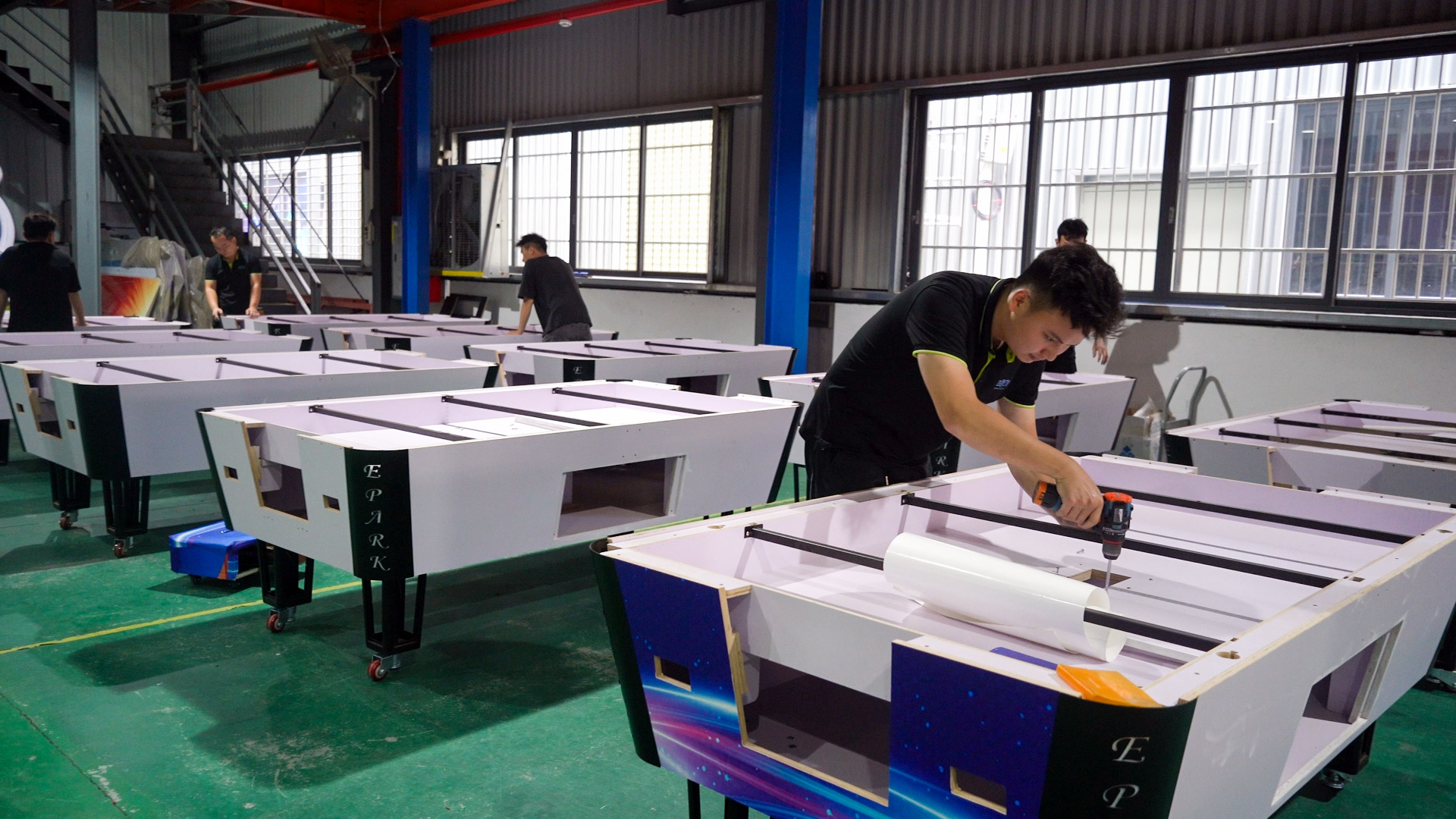
A first arcade lineup works when each machine family answers a specific floor problem rather than duplicating the same appeal.
The Problem-Solution Path: Matching Machine Families to Venue Goals
Each machine family below is presented as a solution to a defined floor problem. Read the problem first; if it does not describe your site, the machine family behind it will not solve it either.
Goal 1 — Turn walk-bys into repeat play: Ticket Redemption Machine and Claw Machine
The most common first problem is that visitors walk the floor without committing to a game. Ticket redemption machines and claw machines address this because the reward is visible before play begins. A ticket redemption machine converts a short play cycle into a redeemable outcome, which gives visitors a reason to try a second machine while accumulating tickets. Claw machines and doll machines work on the same low-commitment principle with a prize object placed directly inside the cabinet.
What this family demands from the floor: placement on the traffic path rather than in a back corner, plus a prize and redemption inventory plan that has to be maintained continuously. These categories are inventory-linked attractions, not set-and-forget equipment.
Goal 2 — Extend group dwell time: Basketball Arcade Machine, Air Hockey Table, Sport Game Machine, Boxing Arcade Machine, Dart Machine, Bowling Machine
The second problem is single-play visits: a group arrives, plays one round, and leaves. Head-to-head and score-based formats change the group dynamic, because two or more people are occupied at once and a score creates an obvious rematch. Basketball arcade machines, air hockey tables, dart machines, bowling machines, boxing arcade machines, and other sport game machines belong to this group.
What this family demands from the floor: enough clearance for two players plus spectators, and a seating or standing area nearby so the group that is waiting remains on site. Where a machine requires physical contact or a full swing — boxing and bowling in particular — clearance is a safety issue as well as a comfort issue.
Goal 3 — Hold the family segment: Kids Arcade Game Machine, Commercial Kiddie Ride, Indoor Playground Equipment
The third problem is segment exclusion. If the venue's audience includes families with young children, the children need equipment sized for them and the parents need a place to watch. Kids arcade game machines and commercial kiddie rides serve the child directly; indoor playground equipment gives the family unit a longer stay and creates a natural anchor zone around which the child-facing cabinets can be arranged.
What this family demands from the floor: a visible sightline from the parent area to the child area, and a supervision policy. Playground equipment and kiddie rides are also the categories most sensitive to destination-market safety and conformity requirements, so documentation should be requested at quotation stage rather than at shipment.
Goal 4 — Create an anchor: Racing Game Machine, Shooting Game Machine, VR Simulator
The fourth problem is a floor with no destination. Anchors give the site a reason to be chosen over a competitor. Racing game machines and racing simulators, shooting game machines and shooting simulators, and VR simulators or VR game machines occupy more space and more of the equipment budget, but they change how the venue is perceived from the entrance.
What this family demands from the floor: a dedicated zone with power, ventilation, and a queue line, plus staff who can brief players. VR equipment in particular needs an operating routine — session timing, headset hygiene, and a staff member assigned to the zone — otherwise the anchor becomes a bottleneck.
Goal 5 — Keep the payment layer simple: Coin Operated Game Machine and Amusement Game Machine
The fifth problem is operational rather than experiential. A floor running multiple payment methods creates reconciliation work and staff errors. Coin operated game machines and other coin-operated amusement game machines keep the revenue layer familiar and staff-independent, which matters when the venue is new and the team is still small. The trade-off is that a token or card-based environment may suit higher-volume sites better; the decision should follow staff capacity, not fashion.
Step-by-Step: A First-Time Buyer's Decision Sequence
The sequence below converts the goals above into an order of work. Skipping a step usually reappears later as a delivery or commissioning problem.
Step 1 — Map the floor into zones before choosing any machine. Mark an entry zone, a core play zone, a family zone, an anchor zone, and a service route. Only then assign goals to zones.
Step 2 — Assign one goal per zone. A zone with two competing goals usually delivers neither. The exception is a deliberate pairing, such as a redemption machine placed beside a claw machine to share the same prize inventory logic.
Step 3 — Build a mixed lineup, not a collection. Coverage across impulse play, group play, family play, and anchor play is what produces repeat visits. Three cabinets of the same type is a collection; a redemption pair plus one head-to-head sport machine plus one anchor is a lineup.
Step 4 — Confirm physical and electrical fit per position. For each machine, confirm footprint, clearance for players and spectators, power configuration for the destination market, and access for maintenance. Confirm these against the actual site survey, not against the catalog photo.
Step 5 — Put the commercial terms in writing before production. Model, configuration, artwork, packing, delivery terms, and payment milestones should all be written into the order. Verbal configuration agreements are the most common source of dispute in first orders.
Step 6 — Define acceptance criteria before shipment. Decide in advance what will be checked on arrival, who checks it, and what the remedy is if a check fails. Acceptance criteria defined after delivery are negotiation, not quality control.
Step 7 — Plan spare parts and service before the machines land. Consumables, wear parts, and a named technical contact should be in place on day one. A machine that is down for a week costs more than the part that failed.
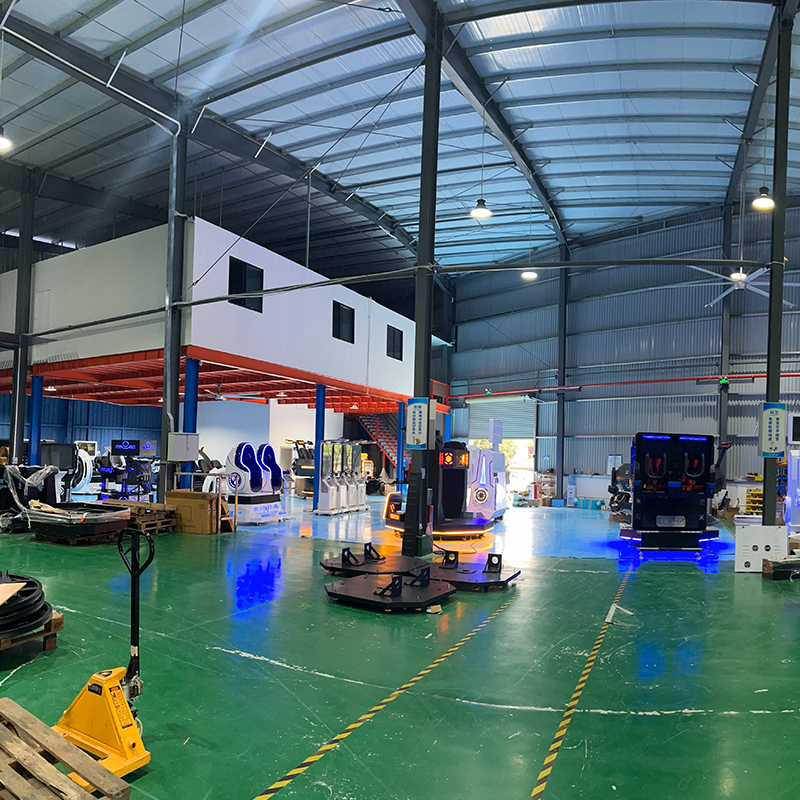
Assembly and pre-shipment inspection are the stage where configuration errors are cheapest to correct.
Three Venue Profiles and the Lineup Logic That Fits Each
Profile A — Compact street-facing arcade
Small footprint, high foot traffic, short visit duration. The lineup logic here favors impulse and repeat categories: a ticket redemption pair and claw or doll machines placed on the entry path, with one head-to-head sport machine to create a group stop. Anchor equipment is usually deferred to a later phase, because a compact site cannot support the queue line an anchor requires.
Profile B — Mall family entertainment zone
Mixed audience with a strong family component and longer dwell time. The lineup logic combines a family zone — kids arcade game machines, a commercial kiddie ride, and indoor playground equipment — with a group zone of basketball, air hockey, and dart machines, plus one anchor from the racing, shooting, or VR family. The anchor is what makes the zone a destination rather than a corridor.
Profile C — Indoor playground corner
An existing playground operation adding arcade revenue. The lineup logic is deliberately narrow: redemption and claw machines positioned at the exit path, where parents already pass with children, plus a small number of kids game machines. Broad arcade coverage is not required here; the surrounding playground already supplies the dwell time.
Comparison: Machine Families at a Glance
| Machine family | Floor problem it solves | Primary player group | Operational note |
|---|---|---|---|
| Ticket Redemption Machine | Low commitment, low repeat play | Mixed, all ages | Requires prize and redemption inventory management |
| Claw Machine / Doll Machine | Entry-path engagement, impulse play | Children, teens, young adults | Prize stock and payout configuration must be managed |
| Basketball Arcade Machine | Short single-play visits | Teens, young adults | Clearance for shooting motion and spectator space |
| Air Hockey Table | Group dwell time | All ages, pairs | Two-sided clearance; surface wear is a maintenance item |
| Boxing Arcade Machine | Group dwell time, high-energy stop | Teens, young adults | Physical-contact safety clearance required |
| Dart Machine | Group dwell time, competitive play | Teens, adults | Projectile safety and wall protection |
| Bowling Machine | Group dwell time, destination play | Families, groups | Lane length and structural space; confirm HS classification separately |
| Sport Game Machine | Broad appeal, score-based repeat play | Mixed | Position near group seating area |
| Kids Arcade Game Machine | Family segment exclusion | Young children | Height and supervision proximity to parent area |
| Commercial Kiddie Ride | Young-child engagement | Toddlers, young children | Safety documentation and supervision policy |
| Indoor Playground Equipment | Family dwell time, structural anchor | Families | Safety conformity requirements; sightline from parent area |
| Racing Game Machine / Racing Simulator | No destination on the floor | Teens, young adults | Dedicated zone, power, queue line |
| Shooting Game Machine / Shooting Simulator | Anchor attraction | Teens, adults | Zone layout and player briefing |
| VR Simulator / VR Game Machine | Premium anchor, differentiation | Teens, young adults | Session timing, hygiene routine, assigned staff |
| Coin Operated Game Machine / Amusement Game Machine | Payment complexity, staff dependency | Mixed | Reconciliation routine; token or card systems may suit higher volume |
EPARK Cabinets Compared with Standard Arcade Game Machines
EPARK (Guangzhou EPARK Electronic Technology Co., Ltd.) is an arcade and amusement equipment manufacturer and supplier based in Panyu, Guangzhou, China, serving amusement parks, arcades, and entertainment venues. For first-time buyers evaluating configuration quality, the company's own positioning against standard arcade game machines is summarized below.
| Dimension | EPARK cabinets (company description) | Standard arcade game machines |
|---|---|---|
| Cabinet structure | Stronger cabinet structure, stable performance, customizable design | Standard structure, limited customization |
| Service life and player appeal | Positioned as 30% longer lifespan and 20% higher player attraction | Baseline reference |
| Best suited to | Shopping malls, FEC, amusement parks, game centers | General placement |
| Long-term cost | Lower long-term maintenance cost | Baseline reference |
| Maintenance | Easy maintenance, remote technical support | On-site service only in many cases |
| Energy and stability | Low power consumption, stable operation | Baseline reference |
Source: EPARK comparison content unit. Figures are the manufacturer's own positioning statements and should be verified against your site requirements and any sample unit you evaluate.
What EPARK Contributes to a First-Time Buyer's Process
EPARK describes its operation as a 25,000 m² showroom and factory in Panyu, Guangzhou, with 150 employees, an annual output of 8,000–10,000 units, a 20-engineer R&D team, and an export share of about 80% across the EU, USA, Middle East, Africa, South America, and Southeast Asia. Its listed product categories include claw machines, air hockey tables, basketball machines, boxing machines, VR simulators, racing arcade machines, shooting game machines, ticket redemption machines, kids game machines, kiddie rides, and indoor playground equipment.
For a first-time buyer, the practical value of this breadth is procurement consolidation: a mixed lineup can be sourced and configured through one production and delivery process rather than several. EPARK's stated service model covers free project solutions tailored to space and business objectives, quality assurance through production and testing standards, one-stop handling from manufacturing to global delivery, and after-sales technical support.
The company's stated risk controls are also relevant to what first-time buyers should request. On product quality, EPARK describes incoming material inspection and production testing with a multi-step inspection process before shipment. On delivery delay, it describes production schedule control and buffer stock. On after-sales, it describes a dedicated after-sales team with spare parts support. On payment security, terms are set per order. Buyers should ask for each of these as a written commitment in the order, not as a verbal assurance.
Procurement Checklist: Terms and Acceptance Criteria
Purchasing terms to confirm in writing
- Exact model, configuration, and options per unit, including any customization.
- Cabinet finish, artwork, and branding approval before production.
- Electrical configuration matched to the destination market.
- Quantity, unit price, and the currency and basis of the quotation.
- Packing standard, shipping marks, and loading plan.
- Delivery schedule with milestone dates, not a single delivery date.
- Payment milestones linked to production and inspection stages.
- Warranty scope, duration, and the remedy for a covered failure.
- Spare parts list, consumables list, and how replacements are ordered.
- Installation and commissioning scope — who does it and at whose cost.
- Documentation set: operation manual, wiring diagram, and the compliance documents relevant to the destination market.
Acceptance criteria to agree before shipment
- Inspection record per unit, referenced in the order.
- Appearance check: cabinet condition, artwork alignment, finish defects.
- Functional check: all game modes, scoring, and payment mechanisms tested.
- Safety check: guards, emergency stops, and player clearances as specified.
- Documentation check: certificate copies match the models actually shipped.
- Spare parts and consumables physically included as listed.
- Named technical contact and response process confirmed.
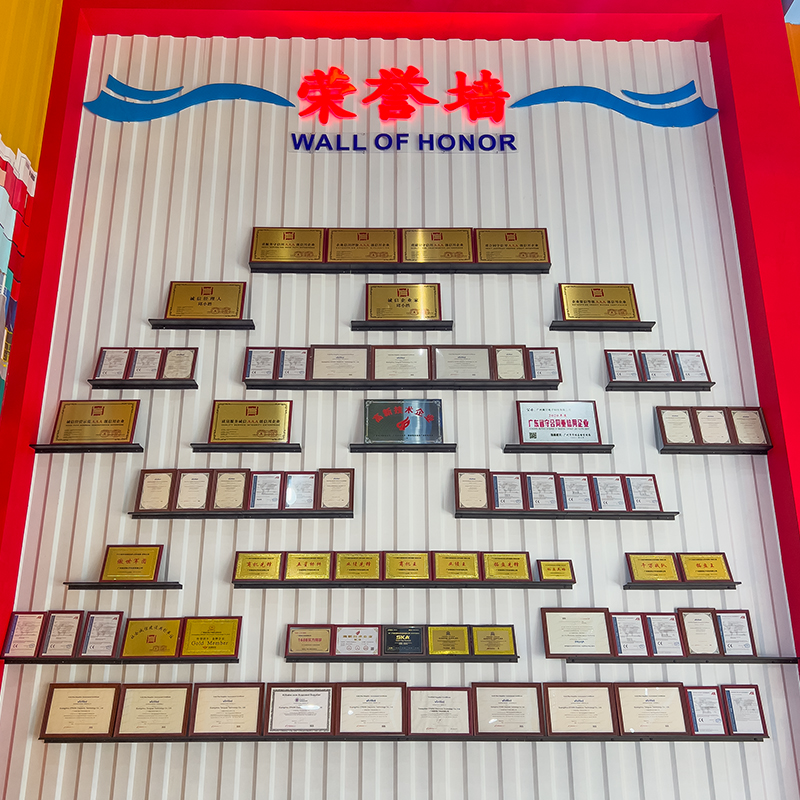
Compliance documents should name the model and product scope you are buying — a general certificate does not cover a specific configuration.
FAQ
What compliance documents should a first-time buyer request before ordering an arcade machine?
Request four details for every certificate a supplier cites: the certificate number, the issuing body, the product scope it covers, and its validity date. A certificate that does not name the model or product family you are purchasing does not cover that configuration. Confirm the trade classification separately with your forwarder, because HS Code 950430 covers games operated by coins, banknotes, bank cards, or tokens and excludes bowling alley equipment, so a mixed order may not sit under a single code. Electrical safety and electromagnetic compatibility requirements are set by the destination market, not by the manufacturer, so the electrical configuration should be confirmed against your market's requirements before production begins. EPARK applies a multi-step inspection process before shipment and supplies a documentation set with the order.
How can I verify a manufacturer's production capability before placing a first order?
Ask for facility layout, production-line photographs, annual output, workforce size, and the number of engineers who will handle your configuration. EPARK describes a 25,000 m² showroom and factory in Panyu, Guangzhou, 150 employees, an annual output of 8,000–10,000 units, a 20-engineer R&D team, and an export share of about 80% across the EU, USA, Middle East, Africa, South America, and Southeast Asia. Cross-check those statements against a business registration record, a factory audit, and references from buyers in your region. Facility area alone does not establish delivery performance; production schedule control and inspection records are the evidence that matters for a first order.
What drives the total cost of an arcade machine beyond the unit price?
The unit price is one line in a longer calculation. The others are spare parts and consumables, freight and insurance, import duties, installation and commissioning, configuration or artwork changes, and the labor cost of routine maintenance. Running cost deserves as much attention as purchase cost: EPARK positions its cabinets as low power consumption and lower long-term maintenance cost compared with standard arcade game machines, supported by remote technical support, which reduces operating cost without eliminating it. Budget by zone rather than by machine, and request an itemized quotation rather than a single delivered figure, so each cost line can be compared between suppliers.
Can I validate a machine before committing to a full lineup?
Yes, and it is the safer sequence for a first purchase. Start with one unit of the anchor or highest-uncertainty category, install it in its intended floor position, and observe how it performs in that specific location before scaling the order. Ask the supplier to confirm in writing what a pilot or sample arrangement includes, who bears the freight, and whether the pilot unit's configuration can be replicated in the full order. Apply the same acceptance criteria to the pilot that you will apply to the full shipment, so the pilot doubles as a test of the supplier's inspection process.
What should be confirmed in the delivery schedule before signing?
Confirm a schedule rather than a date: production start, configuration approval cut-off, inspection date, packing date, and handover to the forwarder, with each stage tied to a payment milestone. EPARK describes production schedule control and buffer stock as part of its delivery risk management, together with a dedicated after-sales team and spare parts support — but these should be written into the order rather than assumed. If you want to move from planning to a specific configuration, you can request a quote or a product catalog from EPARK, or contact the team directly at sales@nanyuetech.com or +86 13903079263.
Conclusion
First-time arcade buyers are not short of options; they are short of a filter. The filter that works is a sequence: define the floor zones, assign one goal to each zone, choose the machine family that answers that goal, confirm the physical fit, write the commercial terms, and agree the acceptance criteria before anything ships. A ticket redemption machine and a claw machine answer the impulse problem; basketball, air hockey, boxing, dart, and bowling machines answer the group problem; kids game machines, kiddie rides, and indoor playground equipment answer the family problem; racing, shooting, and VR equipment answer the destination problem; coin operated machines answer the payment problem.
The market data supports entering the category. It does not decide what belongs on your floor. That decision is made by the operator, in writing, before the first order is signed.
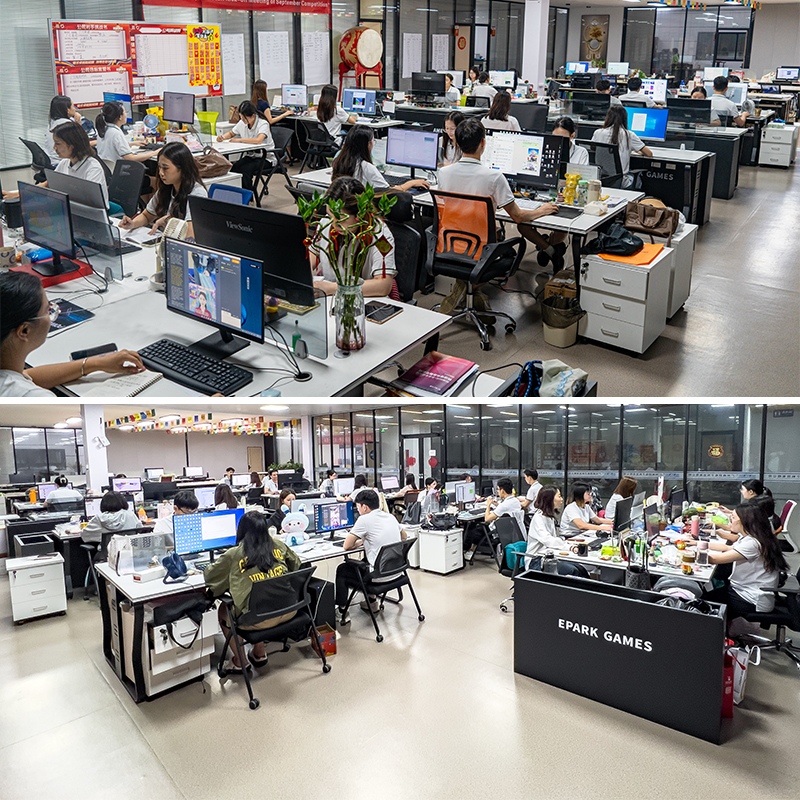
Project planning support turns a floor plan and a budget into a machine schedule and a delivery order.
Next step for first-time buyers
Share your floor plan, target audience, and zone goals, and EPARK will prepare a project solution matched to your space and business objectives — covering redemption, claw, sport, kids, racing, shooting, VR, and coin-operated categories in one quotation. Sample arrangements, catalog requests, and configuration questions: www.eparkgames.com · sales@nanyuetech.com · +86 13903079263 · Building 9, 120 Donghuan Road, Shiqiao, Panyu District, Guangzhou, Guangdong, China 511400.
Have Questions or Need More Details?
Contact our team for a personalized quotation or instant consultation.
Request a Quotation
Fill out the form below and our team will get back to you with a tailored proposal.
WhatsApp Direct Chat
Prefer to chat in real-time? Message us on WhatsApp for instant assistance & quick answers.
- Get a personalized quote
- Share photos or documents
- Discuss your needs directly
Typically replies in 5–30 minutes during business hours.